Faith · Reading

Favorite Books (and More!) for Advent

One of the most exciting and comforting aspects of the end of the calendar year is surely the celebration of Advent, when Christians remember the first coming of Christ and anticipate the second. This season awakens a childlike and reverent wonder that’s a welcome respite from the commercialization that surrounds us during November and December.

I’ve enjoyed Advent both with my family (husband and four children) and also in a more solitary way, with my own daily Advent devotions. I’ll share both kinds of books here. I also became a Christian at age 30, and had absolutely zero previous knowledge of what Advent was or why we ought to celebrate it—so I also want to provide a few details to help those who are fairly new to the concept of the Advent season.

continue reading
Faith

This (Life) Too Shall Pass

There were some days, years ago, when I thought I was going to lose my mind.

I had several children underfoot, some not neurotypical, and there were days when I didn’t handle the stress very well. I cried out to God for help, but it so often seemed like he wasn’t listening. I wondered sometimes how I was going to make it through.

And then my mother-in-law would come over for a visit and in her calm, gentle, non-judgmental way, she would say to me, “This too shall pass.”

continue reading
Faith

When Trouble Strikes, What Will You Reap?

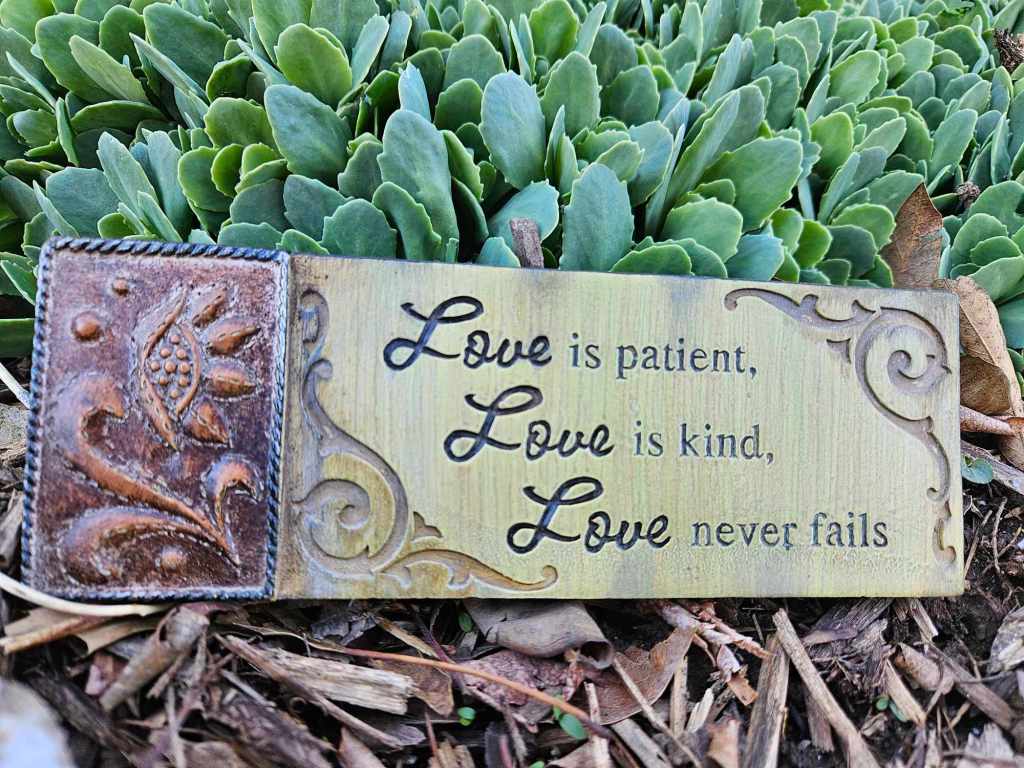
Recently I taught 1 Corinthians 13 (the “love chapter”) to a class of four- to six-year-olds. It’s a famous passage; you’ve probably heard these verses at weddings, or in a sermon about how we should love others. I’m probably not the only one with part of this verse artfully inscribed on a plaque that sits on a shelf in my home.

How do we love others well? If you’ve ever wondered, this chapter will leave no doubt in your mind.

The practical how-to verses (v. 4–8) are right in the middle: “Love is patient and kind; love does not envy or boast; it is not arrogant or rude. It does not insist on its own way; it is not irritable or resentful; it does not rejoice at wrongdoing, but rejoices with the truth. Love bears all things, believes all things, hopes all things, endures all things. Love never ends.”

In this passage, there are eleven straightforward, everyday signs (displays or expressions) of love that we should be attempting with those around us every single day … followed by five looser, more general concepts as reminders of the abiding characteristics of love.

I’ve considered these verses many times during the thirty years that I’ve been a Christian. In fact, I bought that decorative plaque that I mentioned during the time in my life when I had several young children underfoot. During those busy and chaotic years, I realized how much I needed a constant reminder of how to show love to everyone in my household (husband included).

Lately I’ve been thinking about these verses again regarding family … extended family, that is, and how we respond to difficulty or tragedy when it strikes. Because none of us will escape trouble of varying degrees in our lives. At some point, and more than once, it’s going to strike.

continue reading
Reading

Encouraging Stories and Reflections for Every Mom

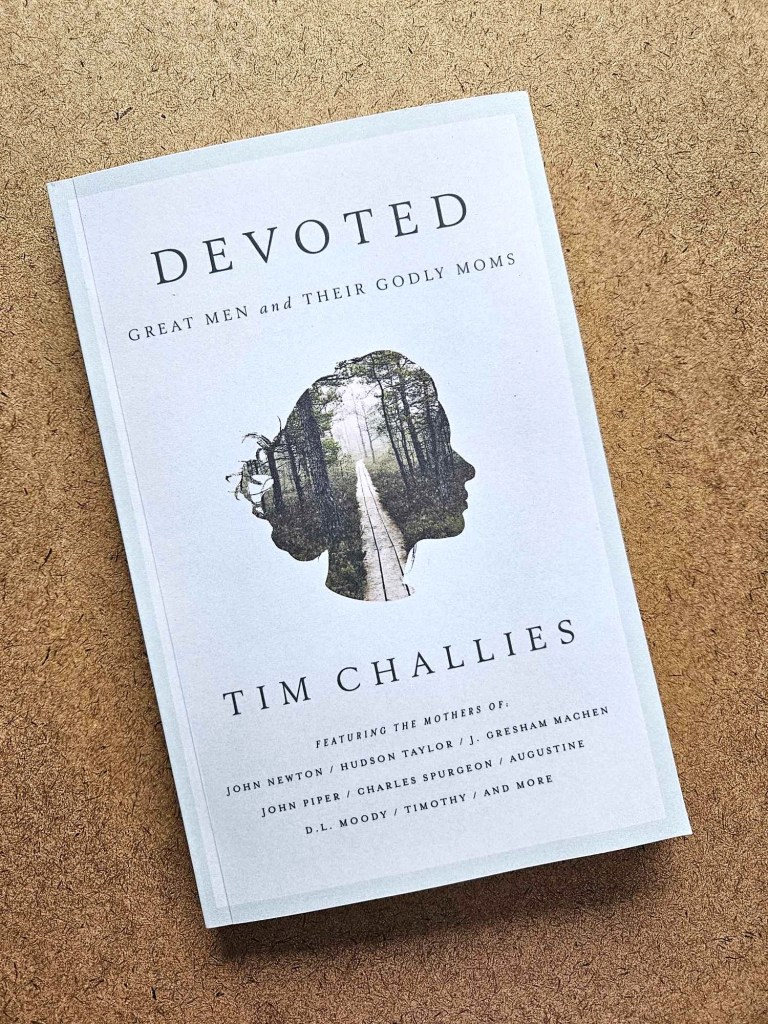
Sometimes the title says it all, and sometimes it falls a little short. Here’s a book that’s much more than you might suspect from its title.

Devoted: Great Men and Their Godly Moms, by Tim Challies, is a mere 124 pages long but is packed with encouragement, wisdom, exhortation, and downright fascinating stories about eleven famous Christian men and their mothers. I’ve read books similar to this before (such as Lamplighter’s Mothers of Famous Men), and they’ve been about what I’ve expected: fairly interesting stories about strong and virtuous women who’ve raised children on to greatness, in a wise and godly manner. This one is so much more.

What makes Devoted different?

continue reading
Parenting

Three Words for Christian Parents

My granddaughter and I had a conversation recently about family while cooking together in my kitchen—a narrow galley kitchen in a house of less than 1500 square feet:

Me: “Papa and I used to have lots of children living with us in this house. We had your daddy first, and then his sister, and then two more brothers! I wonder how many people that is all together who used to live here?”

My granddaughter, a spirited, math-loving three-year-old, is now intensely interested in how this conversation is going. Her attention is momentarily diverted from stirring the eggs. “How many?” she asks breathlessly, eyes wide. She holds up her fingers to count as I say the family names one by one.

“Six!” she shrieks in disbelief. “Six people in this house?” This cracks me up because that’s the exact response I got from certain people when we announced 18 years ago that we were having a fourth child, and that no, we were not planning to move.

“Yes, six!” I smile at her, and I’m overcome, as I so often am these days, at the memories in those two little words.

Because after 30 years of marriage, of raising four children who all started very small but quickly (so quickly) grew into full-sized humans who did indeed take up a lot of space in our small house … after all those years, this somewhat crowded nest is almost empty.

*                      *                      *

Here is God’s plan for us when we begin families of our own: that we would raise up children—human beings made in his image—all the way to adulthood, even though we ourselves are far from perfect and in need of forgiveness every day. That we would be in charge of small, vulnerable, impressionable people 24/7, despite our fairly serious character flaws. That we would provide for them in every way throughout every life stage, even when our own sinful natures are in frequent conflict with theirs. When you think of the enormity of this task that God has set before parents, imperfect and ill-equipped as we are, it’s hard not to wonder, what was he thinking?

continue reading

Faith

On Whales, Menopause, and Thanks to God

Have you ever thought to yourself, “I wonder how many mammals go through menopause?” I certainly hadn’t—up until last week.

It turns out that only a handful of mammals are known to experience menopause: humans, chimpanzees, and five species of toothed whales (short-finned pilot whales, false killer whales, killer whales, narwhals, and beluga whales). All other mammals (5,000+ species in all) retain their ability to reproduce throughout their lifespan. And as difficult and unpredictable as human menopause can be, I imagine that the alternative of never-ending fertility is not something most women would be jumping at the chance to experience, either.

In God’s good design, we humans share this somewhat rare life stage with only six other species on earth. Humans, however, are the only creatures who are able to reflect upon the experience of menopause, and even (stay with me here) thank God for it.

continue reading
Parenting

Not Neurotypical: A Love Story

Neurodivergence is the water that I swim in.

As a child, I knew from a very early age that I was “different.” Different from my family, teachers, and classmates, and as I got older, different from my coworkers, neighbors, and extended family. I knew this in my heart, and I also knew it because people told me—and, especially in childhood, usually not in positive ways.

Now, “neurodiversity” wasn’t a term for most of my life, and I had to somehow define or name this thing about me, so I thought of myself as a “black sheep.” I had no other word for my differences, those things about me that I had been told to keep hidden, so that I would fit in with others, have friends, and not be so weird.

In God’s good plan, I married a man who was also “different.” Not in all the same ways that I was different, but still. He was clearly swimming in neurodivergent waters, and we had an immediate “You, too!?” connection. In retrospect, it’s not surprising that we, being two “black sheep” kinds of people, would produce children who (mostly) did not fit into the typical mold. And yet, for whatever reason, I was completely surprised and unprepared when I gave birth to a not-neurotypical child.

continue reading
Parenting

“My Greatest Accomplishment”—I Get it Now, Mom

My mom’s 40th class reunion was coming up, and in preparation for that, she had to tell them her greatest accomplishment so they could put it in the program next to her name.

“It’s you,” she told me. “I’m going to put that my daughter is my greatest accomplishment.” Then, with matter-of-fact truthfulness, “I don’t have anything else to put anyway, but even if I did, I would put you, because you’ll always be my greatest accomplishment.”

We were talking on the phone when we had this conversation—her in a recliner in the living room of her trailer, with a book in her lap and a cat on the nearby couch; me in my tiny kitchen, tethered to the wall by a stretched-out phone cord, stirring a pot on the stove and keeping one eye on my toddler and preschooler.

It wasn’t the first time I’d heard her say this, but I’d never really understood it. What did she mean, I was her “greatest accomplishment”?

continue reading
Reading

Same House, Different Worlds: A Mother-Daughter Reading Story

Shared interests are one of the best things about having kids.

At some point, Lord willing, they will begin to love something that you love: Hunting or fishing. Gardening or cooking. Baseball, running, or golf. Cars, trains, or motorcycles. Concerts, movies, or video games. Dogs, cats, or babies. Crocheting or carving wood. Those times when you bond with one of your offspring over a shared love of [whatever] are some of the priceless payoff moments of having children, for sure.

My mother and I both loved to read—we bonded over books we discovered together, books we gave to each other, books we couldn’t wait to discuss, books that inspired us, puzzled us, and made us swoon. My mom and I didn’t have much in common, but from my childhood through my mid-forties when she passed away, books were our common ground. 

So naturally when I had a daughter of my own, I eagerly anticipated sharing books together, reading in tandem, and the wonderful discussions that would follow. (I just assumed she’d be a reader; the possibility of two book-loving parents having a child who did not even like to read never once entered my head back then.)

continue reading
Faith

Ambassadors for Marriage

“So how’s married life?”

According to my recently married 24-year-old daughter, this is the number one question people ask soon after they learn you are newly wed. She’s answered it countless times, most recently with a co-worker who was at the beginning of a new dating relationship. Just a few minutes into their lunch together, this friend asked the question my daughter knew was coming:

“So how’s married life?” Casually, off-handedly, with a quick, friendly smile but seriously inquisitive eyes.

Now, my daughter has often been described by others as being, at all times, unfailingly honest and real. So when she’s asked this question, she gives the unvarnished truth. Her response to that co-worker was the same response she’s given every time:

“It’s great—I love being married.” Straightforwardly and with great sincerity.

The co-worker first looked surprised, then relieved, and then she wanted to know more. Because that was not at all what she expected my daughter to say.

continue reading