Faith · Other Topics

Here’s to Christian Movie Characters Who Live Like Real Christians

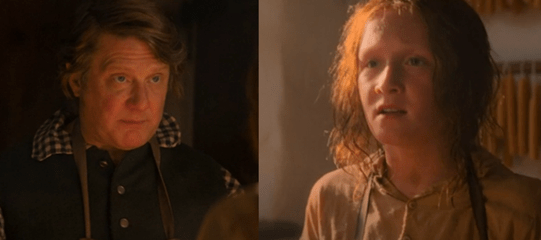
Early on in the movie A Great Awakening (Sight & Sound Films, 2026), there’s a scene that unexpectedly brought tears to my eyes. The characters are a young Ben Franklin, around age 12, and his father, a candle maker. Mr. Franklin tells Ben (who is helping with the candles even though it clearly bores him) that among his 17 children, Ben’s birth order is special to him. He says something to him like, “Ben, you are my tenth son, my tithe given to the Lord. When you were born, I dedicated you to God.” By which he means that he’s hoping Ben will become a minister or preacher, but Ben doesn’t want to do this. Soon after, Ben is offered the chance to move to Boston to work in his brother’s print shop—and the rest is quite literally American history.

I cry pretty easily at movies, but even so, I wondered as I watched this scene: Why am I even getting weepy over this? It wasn’t because of the tender, well-acted incident between father and son, or the fact that Ben would soon be allowed to “follow his heart,” or that his father was kind and understanding rather than harsh or domineering.

continue reading
Faith

Three (Hard) Quotes for the Christian Life

When I became a Christian at age thirty, I knew I needed a lot of work, so I looked forward to the ways that I would surely be changed as a result of my new life in Christ. Some changes came easily—cleaning up my speech and stopping swearing, for example. But most of the other changes that happened to me (and there were many) took much more effort and much more time, such as finally being able to forgive family members for past hurts. As I grew in Christian maturity, I realized that all of these changes and challenges are a part of the lifelong sanctification process.

And of course, that sanctification process isn’t over yet. I still need a whole lot of refining, as we all do, in order to be holy, or set apart for God: “As obedient children, do not be conformed to the passions of your former ignorance, but as he who called you is holy, you also be holy in all your conduct, since it is written, ‘You shall be holy, for I am holy’” (1 Peter 1:14-16).

Recently I was reminded of three challenging, life-changing quotes that aren’t from the Bible, but are particularly convicting in terms of how Christians are set apart for God. They touch on areas of our lives that we don’t especially like to think about or talk about freely with others:

continue reading
Faith · Reading

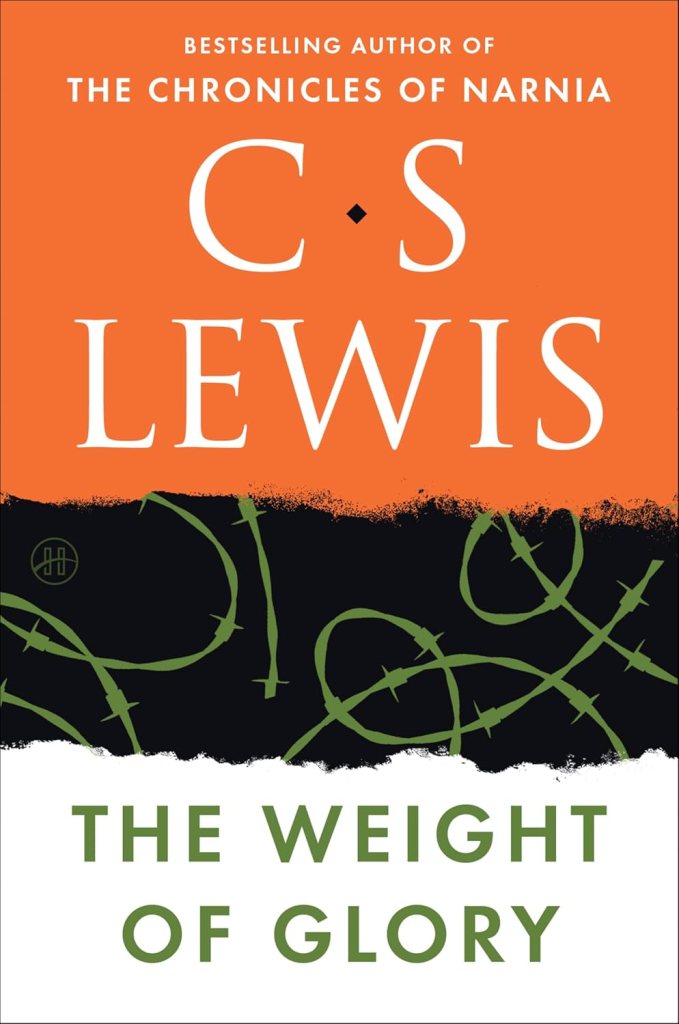
A Grown-Up Visits Narnia, and What She Found There

I never read The Chronicles of Narnia as a child. In fact, I don’t think I had ever even heard of C. S. Lewis until I read Mere Christianity when I was nearly thirty.

Ten years later, I had three (almost four) children, and I read The Chronicles of Narnia aloud to them during lunch, as a part of our homeschool day—one of a very long line of lunchtime read-alouds with my kids. When I read Narnia that first time, my brain was partly engaged in the story as you would expect, but partly I was in teacher mode as I was with all read-alouds: Do they know the meaning of this word? Do I need to explain this scene? Is this sentence something I need to verbally edit as I go? Can we get to the end of this chapter before the 5-year-old runs out of food? When I close the book, is there anything we ought to talk about before they leave the table?

So yeah, I was distracted. I remember appreciating the story, though, and discussing the Christian allegory aspect with my children.

In the Narnia books, grown-ups are not allowed to enter Narnia from our world (the exception is that when Narnia is created, two adults are a part of that). When Narnia needs help, certain children from our world are called by Aslan to assist; then around the time they reach adolescence, they are told that they can’t return. How wonderful to be a child reading Narnia for the first time, imagining what it would be like if you, too, were one day called to assist this magical place of Talking Beasts, naiads and dryads, centaurs and fauns, and High Kings and Queens.

But alas, at my age, I’m too old for those kinds of dreams, in more ways than one. Still, I wanted to revisit Narnia as a grown-up, just for myself. Not as a teacher, not as a mom, but just for me. My questions going into this reading were (1) What would I think about the books as an adult, and (2) What affect, if any, would the reading experience have on me?

continue reading

Other Topics

Why I Ditched My Scrolling Habit, and What I Got in Return

One of the good gifts that God gives to his children is the gift of time. How do you use yours? Do you use it wisely and with a clear conscience, at least most of the time? Or (be honest, now) are you scrolling it away?

For the past several years, I’ve been feeling more and more convicted about how much time I spend on my phone. When I say “convicted,” I mean it seriously. I’ve felt like the Holy Spirit was nudging me to evaluate my online habits (in particular, mindless scrolling and compulsively checking my phone), call them out for what they were (a waste of my God-given time), and change my behavior for good.

continue reading
Faith

Play Your Best for Him

The Christmas song that’s most likely to make me cry isn’t actually based on the Bible.

Everyone knows this song, and it’s often mocked as being overly sentimental or annoying. There was even a challenge going around a few years ago: who could go the longest without hearing it during the month of December?

There are jokes about this song, such as the one about what a sleeping newborn really needs … is a drum solo.

Still, I love “The Little Drummer Boy.” And one line in particular makes me tear up every time.

continue reading
Faith

Dear Friend, You’re Already Found

“What is it that keeps you from looking for God?”

When I heard this question in a sermon last week, I had just seen an excellent live performance of Dear Evan Hansen a mere 12 hours before. If you’re one of the many who have seen this show, you know the song that’ll be in your head for days: “You Will Be Found” (lyric video here).

The main character in this musical, Evan Hansen, is a high school student who has social anxiety and great difficulty fitting in. He feels awkward and out of place most of the time. During the course of the show, he struggles greatly with the idea of being found—not necessarily because he feels lost, but because he feels invisible. So I suppose that the theme is not just about being found, but being seen. And really, aren’t they just two sides of the same coin?

Evan has no true friends, so when he sings these lyrics, they’re especially poignant:

continue reading
Faith

Hello, Sixty

“I’ll be sixty in a couple of months.”

At the present time, I can say this casually and effortlessly, without cringing, whispering, or grimacing. It was not always this way.

Last year, I could hardly say the number aloud, so I’ve actually come a long way from my state of utter denial. I’m not sure why it’s been so hard for me to accept this number, sixty. I’ve heard that “sixty is the new forty,” but honestly, sixty is the age where you can no longer even remotely pretend that you are still young. Sixty actually sounds kind of old.

continue reading
Faith

This (Life) Too Shall Pass

There were some days, years ago, when I thought I was going to lose my mind.

I had several children underfoot, some not neurotypical, and there were days when I didn’t handle the stress very well. I cried out to God for help, but it so often seemed like he wasn’t listening. I wondered sometimes how I was going to make it through.

And then my mother-in-law would come over for a visit and in her calm, gentle, non-judgmental way, she would say to me, “This too shall pass.”

continue reading
Faith

When Trouble Strikes, What Will You Reap?

Recently I taught 1 Corinthians 13 (the “love chapter”) to a class of four- to six-year-olds. It’s a famous passage; you’ve probably heard these verses at weddings, or in a sermon about how we should love others. I’m probably not the only one with part of this verse artfully inscribed on a plaque that sits on a shelf in my home.

How do we love others well? If you’ve ever wondered, this chapter will leave no doubt in your mind.

The practical how-to verses (v. 4–8) are right in the middle: “Love is patient and kind; love does not envy or boast; it is not arrogant or rude. It does not insist on its own way; it is not irritable or resentful; it does not rejoice at wrongdoing, but rejoices with the truth. Love bears all things, believes all things, hopes all things, endures all things. Love never ends.”

In this passage, there are eleven straightforward, everyday signs (displays or expressions) of love that we should be attempting with those around us every single day … followed by five looser, more general concepts as reminders of the abiding characteristics of love.

I’ve considered these verses many times during the thirty years that I’ve been a Christian. In fact, I bought that decorative plaque that I mentioned during the time in my life when I had several young children underfoot. During those busy and chaotic years, I realized how much I needed a constant reminder of how to show love to everyone in my household (husband included).

Lately I’ve been thinking about these verses again regarding family … extended family, that is, and how we respond to difficulty or tragedy when it strikes. Because none of us will escape trouble of varying degrees in our lives. At some point, and more than once, it’s going to strike.

continue reading