Shared interests are one of the best things about having kids.
At some point, Lord willing, they will begin to love something that you love: Hunting or fishing. Gardening or cooking. Baseball, running, or golf. Cars, trains, or motorcycles. Concerts, movies, or video games. Dogs, cats, or babies. Crocheting or carving wood. Those times when you bond with one of your offspring over a shared love of [whatever] are some of the priceless payoff moments of having children, for sure.
My mother and I both loved to read—we bonded over books we discovered together, books we gave to each other, books we couldn’t wait to discuss, books that inspired us, puzzled us, and made us swoon. My mom and I didn’t have much in common, but from my childhood through my mid-forties when she passed away, books were our common ground.
So naturally when I had a daughter of my own, I eagerly anticipated sharing books together, reading in tandem, and the wonderful discussions that would follow. (I just assumed she’d be a reader; the possibility of two book-loving parents having a child who did not even like to read never once entered my head back then.)
I got my first inkling that things were not necessarily going to turn out the way I’d planned when she was a mere tot, perhaps two or three years old. Now, she was a very agreeable child (and is indeed a very agreeable adult) who would happily sit and listen to any book I read aloud, no matter the length or the genre. But I soon discovered something that greatly surprised me about this daughter of mine, something I didn’t expect and could not understand based on my own experience. She liked (preferred, even!) an author I had never liked, even in my own childhood. She liked Dr. Seuss.
And I mean, she really, really liked him. For two or three years, when she was given the choice from dozens (okay, hundreds) of books in the house for her story time, she would invariably ask for Dr. Seuss. It mattered not which Dr. Seuss—she liked them all.
I was not a fan and never had been. But my husband was unapologetically a member of Team Seuss, both as a child and as an adult. He could read Dr. Seuss aloud (even Fox in Socks tongue twisters) over and over and over, and it did not drive him batty—he actually enjoyed it. “Great!” I told him. “You can read all the Dr. Seuss books aloud until she gets tired of them!” It’s fine, I thought. Soon we’ll be past this little aberration in her reading preferences and we can get on to the good stuff together, she and I.

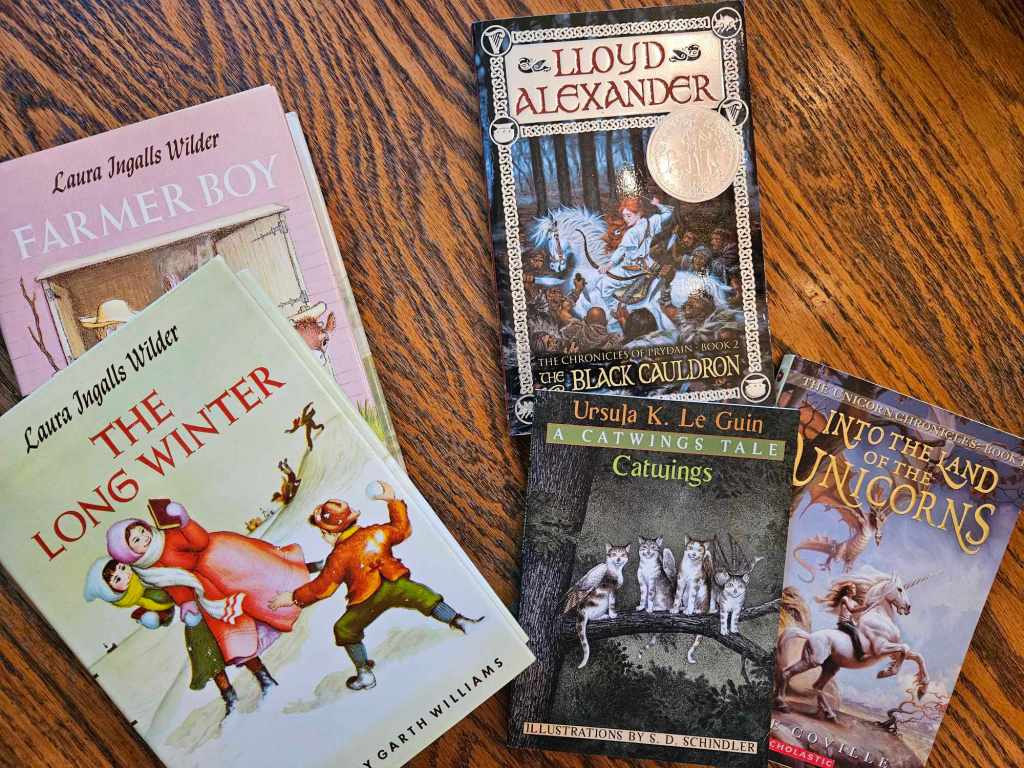
My next reading wake-up call happened when she was around eight or nine. This was the same age I was when I began reading the book series that would change my life and influence my reading for decades to come: Laura Ingalls Wilder’s Little House books. Oh, how I loved late 19th-century prairie life! And I so wanted to share this love with my only daughter, who I was certain would fully understand and agree. How could she not? And so I tried, several times, to ignite her love of prairie stories—home-based tales of loving families, bad weather, hard work, domestic chores, uncooperative animals, and enduring fortitude in the face of hard times. I loved all of it, and I still do.
She was absolutely not buying it. She didn’t want to read Little House at all—and so she didn’t, bless her heart. She was instead reading the books she loved, including, and in approximate order: The Unicorn Chronicles, Warriors (cat fantasy) books, The Chronicles of Prydain, the Catwings series, Gregor the Overlander, Ranger’s Apprentice, Percy Jackson, Artemis Fowl, Septimus Heap, Raising Dragons, and so on and so on. You see where this is going.
I had never read such books in my life. I had no interest in reading such books. I was pretty widely read, but fantasy was not something I had ever once felt even the remotest desire to pick up.
So for years, my daughter and I were both avid readers living under the same roof, both cherishing our daily quiet time for reading, both loving our frequent trips to the library together … and yet in our own separate reading worlds, genre-wise.
She and I have talked about the vast difference in our reading preferences many times over the years. We’ve speculated how we two closely related, voracious readers, who have quite a bit in common otherwise, could have gravitated toward such completely different types of books in our childhoods. Here is one theory we came up with: is it possible that in childhood, you often choose books based on what you don’t have in real life—what is different and unknown to you, and perhaps something you yearn for? My own childhood was filled with dysfunction, uncertainty, and family drama, and so I sought out realistic fiction with secure, intact families, parents and siblings who were reliable and loving, and characters who overcame obstacles through faith, hard work, and perseverance. While my daughter, who was already growing up in a stable and secure home very much like the one I had so wanted as a child, sought out imaginary settings, otherworldly excitement, mortal peril, magical powers, and other elements of fantasy that held no interest for me whatsoever.
It’s an interesting idea, and I’ve often wondered if it’s true of others’ childhood reading experiences, too.
And so all of that discussion around books and reading (even though we rarely were talking about something we’d both read) led us to the stage we’re in right now. As my daughter got older, around her mid-teens through early adulthood, a wonderful thing happened: we both began to reap the benefits of the other’s very different reading choices. By this time, we knew each other, and each other’s reading styles and preferences, backwards and forwards—largely from trying so many times, unsuccessfully, to make our case to the other for why she was reading the wrong books. And the time came when we each began to carefully consider what the other would truly enjoy reading and to thoughtfully suggest certain books that might fall into that small, sweet spot of overlap in our reading tastes.
It’s worked out beautifully for both of us. I can honestly say that I love Harry Potter and Brandon Sanderson’s Mistborn series. She loves Agatha Christie, Jane Eyre, and The Book Thief. We share a love for Matilda, The Mysterious Benedict Society, and The Chronicles of Narnia. I introduced her to Susanna Clarke’s astonishingly unique Piranesi and she returned the favor with Clarke’s magical alternative history Jonathan Strange and Mr Norrell.
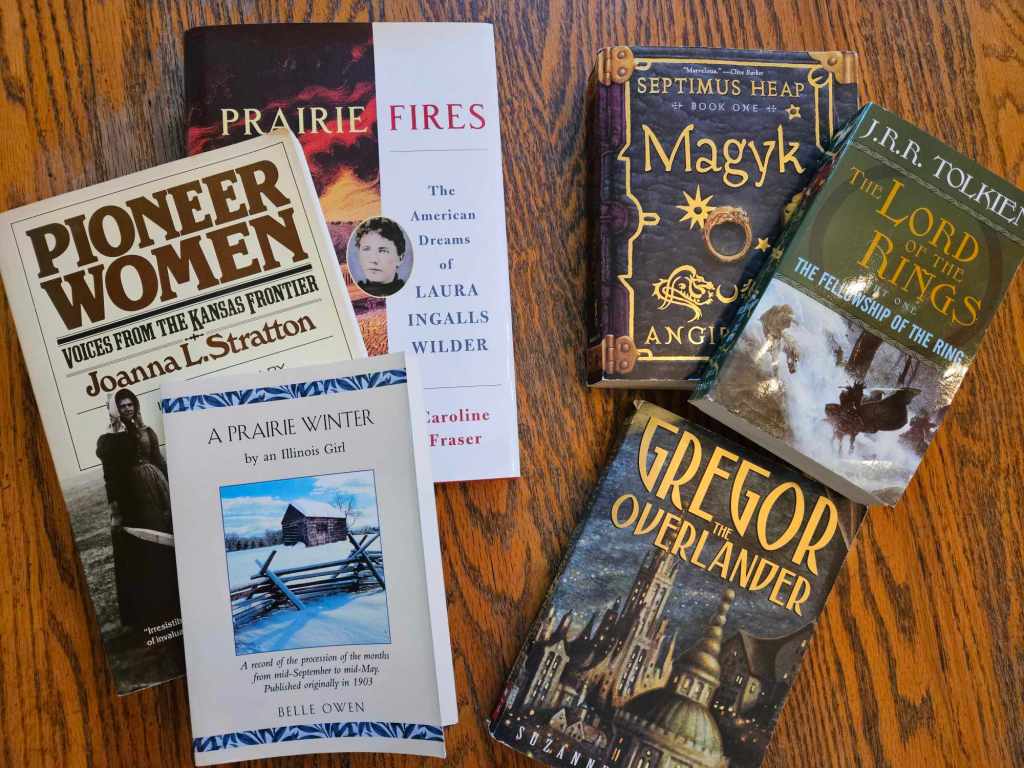
Of course, our reading overlap still has its limits. She has yet to convince me to read The Lord of the Rings (Lord knows I’ve tried) or Sanderson’s Stormlight series. I don’t even try to talk her into historical fiction, pioneer diaries, cookbooks, theology books, biographies, or most of the other many books that I read. And this is all perfectly fine, of course. We’re both very selective in what we suggest to the other so that when the recommendation does happen, it’s taken seriously and usually acted upon, with positive outcomes on both sides.
I have two very young granddaughters now, the children of my oldest son, who may or may not become avid readers, who may or may not share my love for Laura Ingalls Wilder and an entire related genre of pioneer fiction and nonfiction. We’ll see how that goes, and I’m not going to hold my breath. In the meantime, I know now that what’s better than having a daughter who merely reflects my reading preferences is having a daughter who has expanded my reading preferences … and I can return the favor. We’re never going to live in each other’s reading worlds, but sometimes we can go for a nice, long visit.

 Great and Noble Tasks
I think you are on to something about reading preference. It is the same in our household too!
LikeLike
That’s so interesting!
LikeLike