
Faith · Schooling

The Holy Work of Teaching

This fall, I get to teach again.

That’s been the case every year for the past thirty or so, but the hopeful anticipation never wears off. I’ve taught preschoolers through adults … in public school, homeschool, Sunday school, and Bible study … with countless lessons of my own as well as other teachers’ lessons as a sub. Like writing and theatre, teaching is in my blood.

For the past several years, I taught women’s Bible study—I had been terrified to teach adults, but now I’m so glad I had the opportunity. For many years before that I taught high schoolers, both in public school and in Sunday school. I absolutely loved their honest opinions and insights, their sense of humor, and their natural curiosity for all they needed to know before heading into adulthood. Both the high schoolers and the adults kept me on my toes intellectually and pedagogically, and that’s something I’ve really enjoyed.

And now very soon, I’ll be back in the classroom with much younger students—two classrooms, actually. One preschool Sunday school class and one class I’m teaching in a local Christian elementary school. I know without a doubt that over the next year I’ll have moments of joy and laughter, moments of disappointment and worry, moments of shared excitement and success, and moments of what might look on the surface like utter failure. If you’re a teacher, you’ll also have those moments.

continue reading

Schooling

Big Moments from 23 Years of Homeschooling

I’m retiring this week from a job I’ve had for the past 23 years. It’s a job I chose willingly and have loved. I’ve been a homeschool mom.

Now, homeschooling isn’t for everyone, for lots of reasons. I believe strongly in good schooling options and parental choice, and I’ve written about that a few times already. But I was able to homeschool, I believe God called us to homeschool, and I very much wanted to homeschool, so I did.

I wonder how other moms celebrate or commemorate the end of homeschooling? Here’s my method: First, I had a good, long cry. Then I sent a family text with a picture of a completely clear dining room table (see above), telling everyone that my 23 years of homeschooling had come to an end and how much I loved them. My husband and I went for a walk and got ice cream. And then I sat down to write this highly personal (but maybe a little bit universal?) list of big moments, along with a few pictures from homeschooling in the Matt household:

continue reading
Faith · Schooling

Glue Sticks and Bible Songs

The sweet smiles of two- and three-year-olds … a catchy song written for preschoolers that I still sing to myself decades later … the feel of a tiny hand in mine, clutching a fat glue stick with intense focus … the shining eyes and serious faces of little ones as they hear parts of God’s great story for the first time …

In his wisdom and grace, God gives us people, situations, and experiences that we often don’t recognize as priceless gifts at the time. Some of those gifts were given to me 20 years ago, and it’s only recently that I’ve begun to truly appreciate those busy days of teaching, corralling, discipling, and loving the lively and earnest little children that were entrusted to my care every Sunday morning.

*                      *                      *                      *                      *

continue reading
Schooling

Welcome to the Annual Mid-August Homeschool Mom Freak-Out

Every year for many years now, my August experience has been the same.

I start the summer joyfully (as do whichever of my kids are being homeschooled at the time, even the poor older guinea pigs I subjected to minor “summer math and reading” in early years—sorry, kids). I’m full of hope, relaxed expectation, and plans for catching up on all the things I had no time for during the school year. I even have a list of what I intend to accomplish in all of the “free time” I’m going to have.

continue reading
Schooling

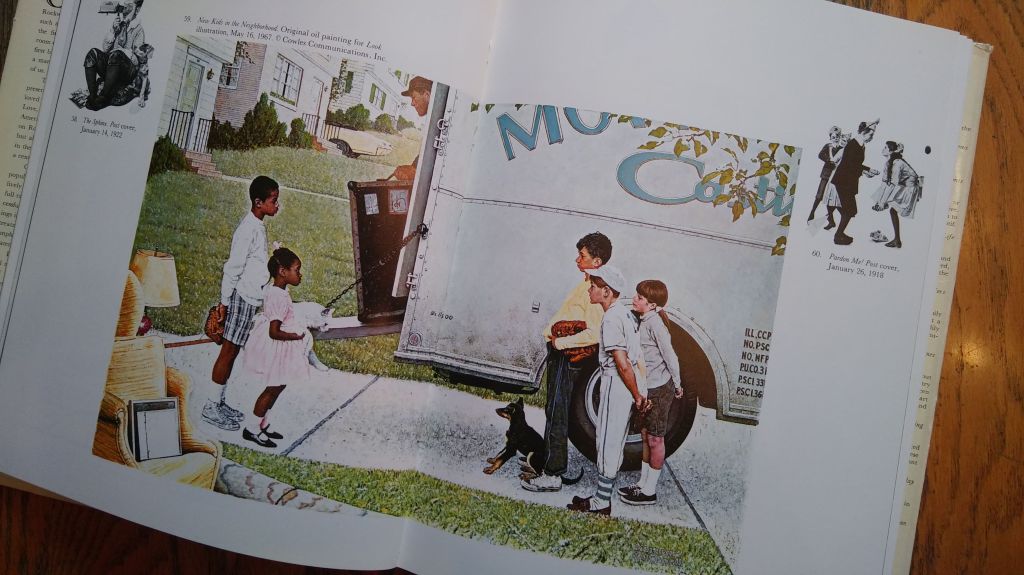
Sharpening Social Skills Using Norman Rockwell Paintings, Part 2

In my previous post, I explained how and why you can use Norman Rockwell paintings as resources to teach social skills and inference to kids on the spectrum, as well as neurotypical (NT) kids. I also provided a walk-through of a lesson based on one of Rockwell’s early paintings.

In this post, I’ll go into more detail on the kinds of questions to ask your child, what to anticipate during the lesson, and what to do about a resistant child or one who seems to be in over his head.

continue reading
Schooling

Sharpening Social Skills Using Norman Rockwell Paintings, Part 1

How to use classic illustrations to teach social skills to kids on the spectrum.

For many years in our homeschool, we did “artist/composer study” every Friday, studying one person each month. For most of those years, we simply focused on the artist’s life and their most important works. But when I was teaching my youngest, I realized an amazing thing during our study of Norman Rockwell: his paintings are incredible teaching tools for developing social skills and inference for kids who struggle in this area. And as a bonus, they’re really fun to talk about.

Both this post and the next are for the benefit of those who are homeschooling a child on the spectrum, as well as those who teach or provide social skills therapy for kids with ASD, or want to use these techniques with neurotypical (NT) kids just for the fun of it.

continue reading
Schooling

Creating Your Own Middle or High School Bible Curriculum

Looking for tips and suggestions on creating a homeschool Bible (or Bible-related) class for your high schooler or middle schooler? Read on to see many of my favorite suggestions for a wide range of students, including a great Bible you may never have heard of, other books at all reading and interest levels, and miscellaneous ideas to round out your Bible class.

continue reading
Schooling

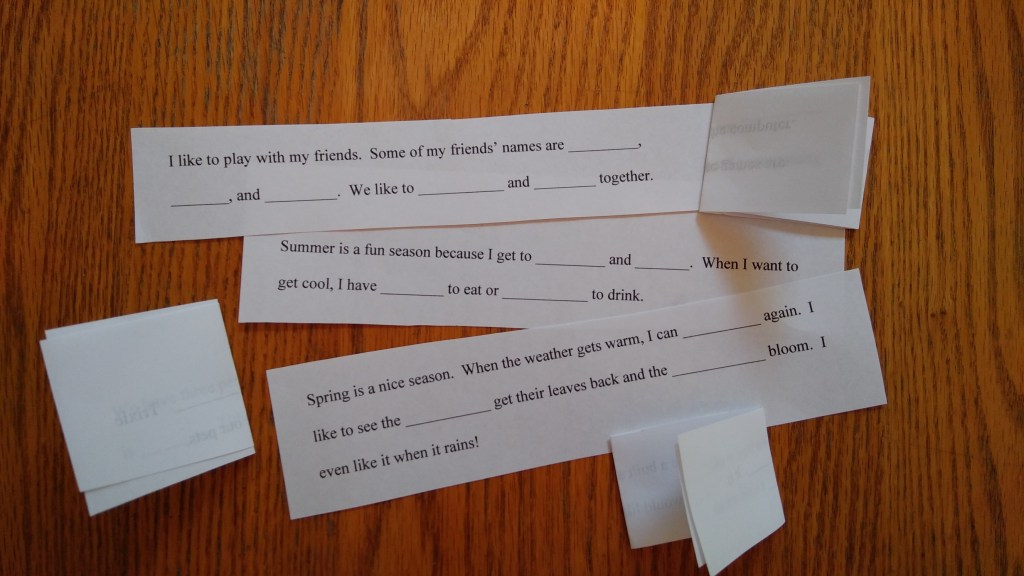
DIY Copywork for Early Elementary

When my kids were young, we mostly followed the Charlotte Mason approach to education: literature-based schooling, short lessons, lots of nature study, and frequent copywork, among other things. For the most part, I kept this pattern for all four of my children, through their many differences in enthusiasm for school, attention spans, and abilities in each area of learning. I quickly discovered that I didn’t need a formal language arts program at all until mid-elementary years, thanks in part to the practice of Do-It-Yourself Copywork.

continue reading
Schooling

Race, Reliability, and Regret: A Teaching Story

In the mid-‘90s, I taught English in an upper-class suburban high school. In my first year of teaching, I was assigned one class of “English Basics,” a class for students who were far behind their peers in their ability to read and write. Basics was a small class, usually only around 10 students, and in the class of sophomores that I was given, the kids were reading on about a second grade level. I was never told the educational or personal background of any child, and I had no special training to help these students, but like all new English teachers, was expected to teach one class of Basics for a couple of years. The positive side, I was told, was that I would only have the class for first quarter and then again for third quarter. Another teacher would take the class second quarter and fourth quarter, so we would each have a “break.”

This staggered-teaching arrangement, especially for a class of kids who were far behind academically, seemed odd to me. I wondered if it had the inadvertent effect of instability and impermanence for the students. The teachers seemed to like it, though, and who was I to say anything—me, a brand-new teacher? Still, I had nagging doubts about this set-up and how beneficial it was for the kids.

continue reading
Reading · Schooling

The “How to Raise a Reader” Myth

I’m an avid reader. I own a couple of thousand books, I read almost every day (for fun), and I’ve been like this my whole life. When I was a little girl, I spent breakfast time reading every box and bag in the kitchen, I read during recess at school, and I was often admonished to “take my nose out of a book” to look at the scenery on car trips.

I married a man who reads almost as much as I do and owns even more books. When we had children, they were all raised in a house full of books, used literature-based learning for school, saw their parents reading often, and were read aloud to until they were teens every single school day. We read really good books, too—fun and interesting books that everybody liked. So naturally, they all grew up to be readers, right?

Wrong.

continue reading