Parenting

The Worst Kind of Parenting Advice

Imagine for a moment that you’re a new parent. Moms, I’m especially looking at you. Now, let me count the seconds with you until you are given unsolicited advice on how to raise the perfect child.

“If you do this, you will end up with this kind of child.” Or, on the flip side, “If you don’t do this, you’re going to ruin your child forever.”

For many years, I thought my own experience in this area was somewhat unique. After all, when I had my first child, I was completely inexperienced with babies or children. I was 27 years old the first time I ever held a baby (it was a fellow teacher’s niece), and then I never again held a baby until my own child was born two years later. Also, I was a brand-new Christian. So I had the double-whammy of total inexperience and complete ignorance of both parenting and how to be a follower of Christ … making me very insecure and open to suggestion on all topics related to parenting and Christian living.

To compound matters, I had a couple of not neurotypical children (I didn’t know this at the time) back in the late 1990s and early 2000s. What could possibly go wrong?

Here are some examples of the parenting advice that I heard—often and loudly—during those years:

continue reading

Schooling

Homeschool, Public School, or Private School?

If you’re looking at different schooling possibilities for your children, or if you’re wondering if the grass really is greener somewhere else, you’ve come to the right place to think through your different options.

Now, this doesn’t mean I’ll tell you what to do. There are lots of people who would love to tell you exactly what you should do—you may have run into them already. But I don’t believe there is only One Right Way to educate children. There are too many variables (among families, schools, children, circumstances) to make such a sweeping statement. What I will do here is to help you think through all of your options, honestly and hopefully without bias.

continue reading
Reading

Encouraging Stories and Reflections for Every Mom

Sometimes the title says it all, and sometimes it falls a little short. Here’s a book that’s much more than you might suspect from its title.

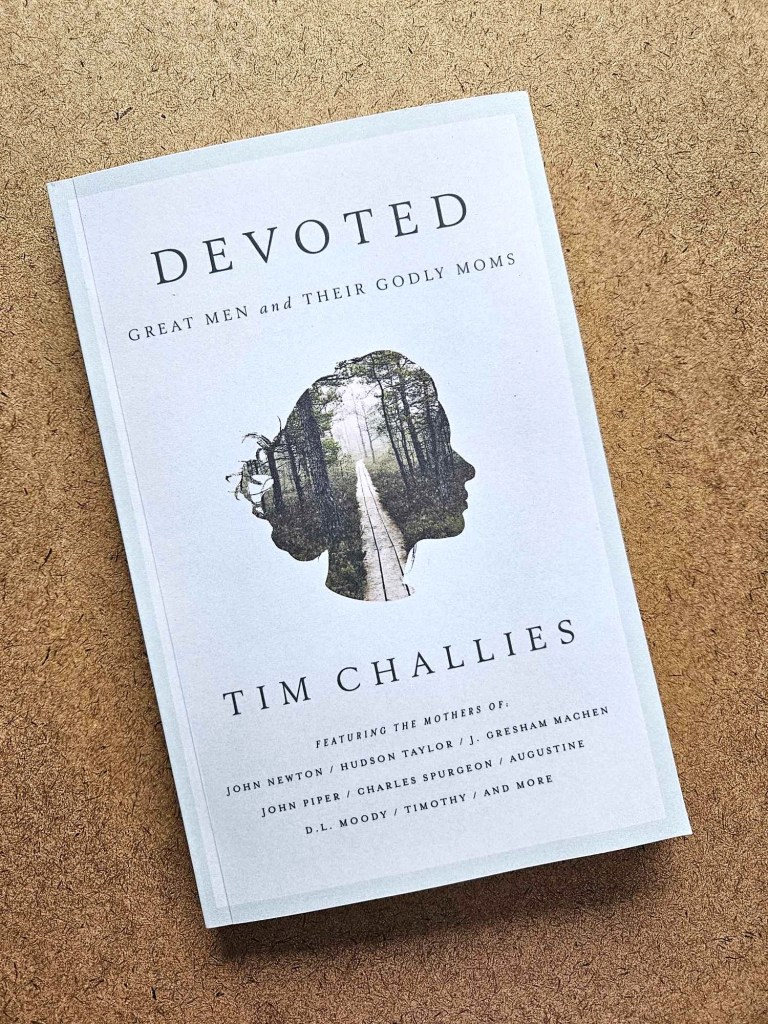
Devoted: Great Men and Their Godly Moms, by Tim Challies, is a mere 124 pages long but is packed with encouragement, wisdom, exhortation, and downright fascinating stories about eleven famous Christian men and their mothers. I’ve read books similar to this before (such as Lamplighter’s Mothers of Famous Men), and they’ve been about what I’ve expected: fairly interesting stories about strong and virtuous women who’ve raised children on to greatness, in a wise and godly manner. This one is so much more.

What makes Devoted different?

continue reading
Reading

Phone-Free and Play-Full

Phone-free and play-full. That’s what childhood used to be, and if you’re over a certain age (born before 1995, about), this probably describes your own childhood.

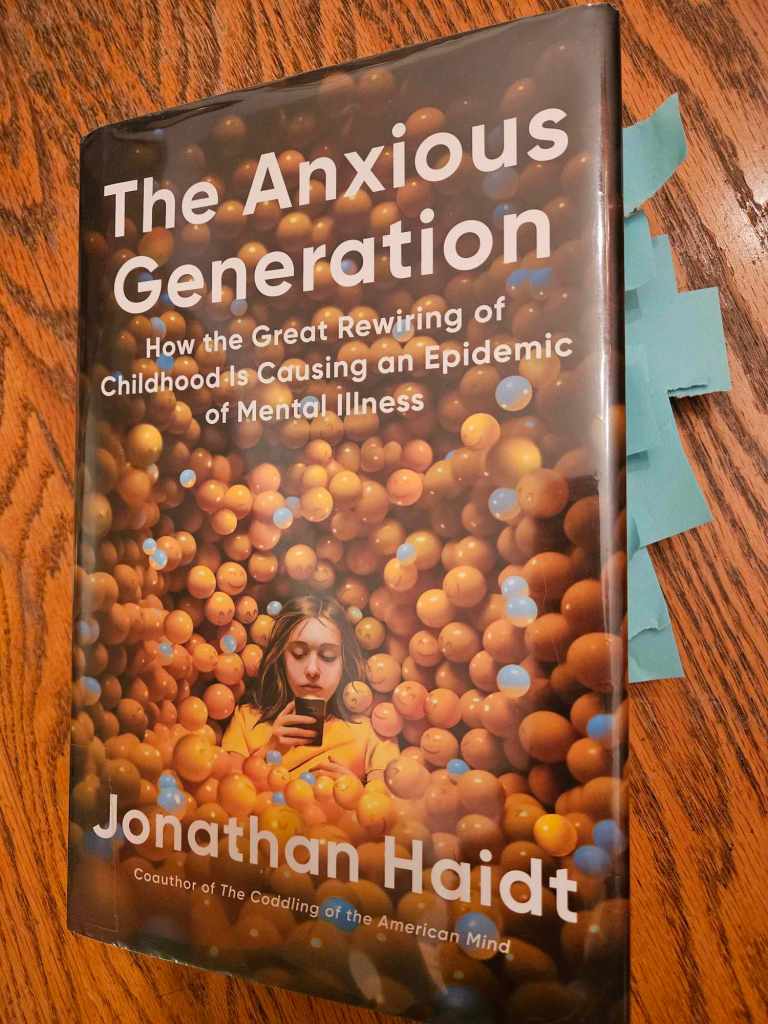
These two phrases—phone-free and play-full—are my big takeaways from Jonathan Haidt’s bestselling book The Anxious Generation: How the Great Rewiring of Childhood is Causing an Epidemic of Mental Illness. The copy I read is pictured above, with my many sticky notes still attached.

You might know Haidt as the co-author of the 2018 bestseller about college students, The Coddling of the American Mind: How Good Intentions and Bad Ideas Are Setting Up a Generation for Failure, among other books. He’s an NYU professor and social psychologist who says in The Anxious Generation what has been obvious to many people just from observation and personal experience, and he’s got the data to back it up.

continue reading
Parenting

Three Words for Christian Parents

My granddaughter and I had a conversation recently about family while cooking together in my kitchen—a narrow galley kitchen in a house of less than 1500 square feet:

Me: “Papa and I used to have lots of children living with us in this house. We had your daddy first, and then his sister, and then two more brothers! I wonder how many people that is all together who used to live here?”

My granddaughter, a spirited, math-loving three-year-old, is now intensely interested in how this conversation is going. Her attention is momentarily diverted from stirring the eggs. “How many?” she asks breathlessly, eyes wide. She holds up her fingers to count as I say the family names one by one.

“Six!” she shrieks in disbelief. “Six people in this house?” This cracks me up because that’s the exact response I got from certain people when we announced 18 years ago that we were having a fourth child, and that no, we were not planning to move.

“Yes, six!” I smile at her, and I’m overcome, as I so often am these days, at the memories in those two little words.

Because after 30 years of marriage, of raising four children who all started very small but quickly (so quickly) grew into full-sized humans who did indeed take up a lot of space in our small house … after all those years, this somewhat crowded nest is almost empty.

*                      *                      *

Here is God’s plan for us when we begin families of our own: that we would raise up children—human beings made in his image—all the way to adulthood, even though we ourselves are far from perfect and in need of forgiveness every day. That we would be in charge of small, vulnerable, impressionable people 24/7, despite our fairly serious character flaws. That we would provide for them in every way throughout every life stage, even when our own sinful natures are in frequent conflict with theirs. When you think of the enormity of this task that God has set before parents, imperfect and ill-equipped as we are, it’s hard not to wonder, what was he thinking?

continue reading
Parenting

Not Neurotypical: A Love Story

Neurodivergence is the water that I swim in.

As a child, I knew from a very early age that I was “different.” Different from my family, teachers, and classmates, and as I got older, different from my coworkers, neighbors, and extended family. I knew this in my heart, and I also knew it because people told me—and, especially in childhood, usually not in positive ways.

Now, “neurodiversity” wasn’t a term for most of my life, and I had to somehow define or name this thing about me, so I thought of myself as a “black sheep.” I had no other word for my differences, those things about me that I had been told to keep hidden, so that I would fit in with others, have friends, and not be so weird.

In God’s good plan, I married a man who was also “different.” Not in all the same ways that I was different, but still. He was clearly swimming in neurodivergent waters, and we had an immediate “You, too!?” connection. In retrospect, it’s not surprising that we, being two “black sheep” kinds of people, would produce children who (mostly) did not fit into the typical mold. And yet, for whatever reason, I was completely surprised and unprepared when I gave birth to a not-neurotypical child.

continue reading
Parenting

“My Greatest Accomplishment”—I Get it Now, Mom

My mom’s 40th class reunion was coming up, and in preparation for that, she had to tell them her greatest accomplishment so they could put it in the program next to her name.

“It’s you,” she told me. “I’m going to put that my daughter is my greatest accomplishment.” Then, with matter-of-fact truthfulness, “I don’t have anything else to put anyway, but even if I did, I would put you, because you’ll always be my greatest accomplishment.”

We were talking on the phone when we had this conversation—her in a recliner in the living room of her trailer, with a book in her lap and a cat on the nearby couch; me in my tiny kitchen, tethered to the wall by a stretched-out phone cord, stirring a pot on the stove and keeping one eye on my toddler and preschooler.

It wasn’t the first time I’d heard her say this, but I’d never really understood it. What did she mean, I was her “greatest accomplishment”?

continue reading
Reading

Same House, Different Worlds: A Mother-Daughter Reading Story

Shared interests are one of the best things about having kids.

At some point, Lord willing, they will begin to love something that you love: Hunting or fishing. Gardening or cooking. Baseball, running, or golf. Cars, trains, or motorcycles. Concerts, movies, or video games. Dogs, cats, or babies. Crocheting or carving wood. Those times when you bond with one of your offspring over a shared love of [whatever] are some of the priceless payoff moments of having children, for sure.

My mother and I both loved to read—we bonded over books we discovered together, books we gave to each other, books we couldn’t wait to discuss, books that inspired us, puzzled us, and made us swoon. My mom and I didn’t have much in common, but from my childhood through my mid-forties when she passed away, books were our common ground. 

So naturally when I had a daughter of my own, I eagerly anticipated sharing books together, reading in tandem, and the wonderful discussions that would follow. (I just assumed she’d be a reader; the possibility of two book-loving parents having a child who did not even like to read never once entered my head back then.)

continue reading
Schooling

Why You Don’t Need to Worry (So Much) about Your Schooling Choices

Some parents seem to know exactly how they’re going to school their children from a very early age—whether homeschool, private school, or public school—never second-guessing themselves  at any point from kindergarten through twelfth grade.

That’s awesome. Terrific! I applaud those parents and commend them for their commitment to whichever school choice they’ve made for their kids. But this article isn’t for those parents.

continue reading
Other Topics

Thoughts on Three Weddings: A Week, Five Years, a Lifetime

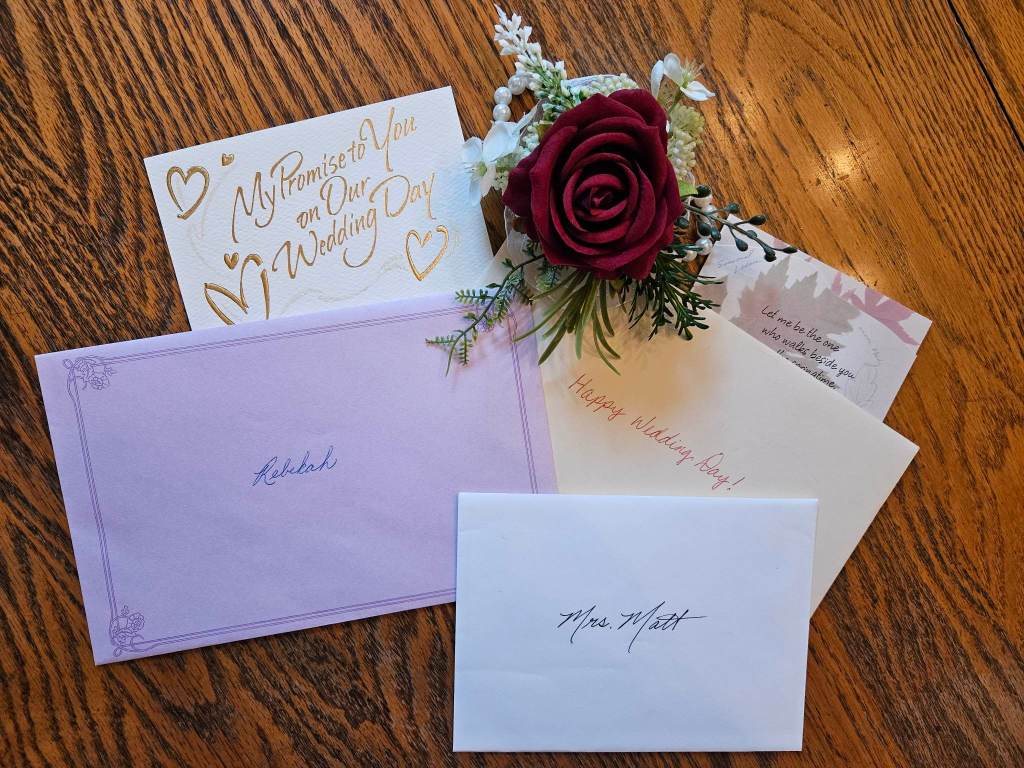
One week ago, a beautiful, highly anticipated event occurred, one that had consumed a great deal of my time and energy for nearly four months. Our daughter got married, moved out of our house, and left us with an almost-empty nest. And we gained a wonderful son.

This was a very different event from 2018, when we celebrated the marriage of our oldest son after his time in the Marine Corps. He became a married man that summer, but he had been overseas for most of the previous four years anyway, so the change was felt much less in the Matt household. We did, however, gain a delightful daughter and eventually two granddaughters, as well.

I have a few thoughts after these two weddings, and I submit them here with the admission that  a) due to my not-so-typical upbringing, I do not know what I’m doing with milestone events, such as special birthdays, graduations, and funerals—I was pretty much winging the whole wedding thing from beginning to end; and b) I have friends who have gone before me (even multiple times) and have helped me along the way, thank goodness. What I have observed from my wedding experience is that:

continue reading