Faith

Letting Go of Bible Reading Expectations

What’s the best daily Bible reading plan? The one that works for you.

Over the past 25 years, I’ve attempted multiple times to read my Bible every day. Many women I knew were in the same boat: having a goal of daily Bible reading, trying repeatedly to make that happen, falling short, and feeling guilt. We were often eager to try new ideas, always looking for the “one thing” that would help us maintain the Bible reading habit past a few days or so. But in all those years of adding this or that, trying this or that plan, I ultimately found success only one way.

Not by adding, but by taking away.

continue reading
Faith

The Thorn in Your Flesh, and What To Do About It

The life of the apostle Paul—unmarried man living 2,000 years ago, Jewish convert to Christianity, known-world traveler who survived beatings, shipwrecks, and imprisonment—can seem distant and foreign to our 21st-century existence. But there is one aspect of Paul’s life that resonates down through the centuries to every believer: his famous “thorn in the flesh.” A thorn in the flesh is a near-constant irritant causing discomfort or pain in life, something you may be able to ignore briefly but is frequently on your mind, and is presumably not there by your own doing.

continue reading
Other Topics

The View from the Middle Back Seat

Remember the ride to school on the bus every day? Or maybe you’ve taken a public bus lately and can picture this in your head: The long, narrow aisle, the many seats on both sides, and on some buses, the special seat in the very back of the bus, right in the middle, at the end of the aisle.

I like that seat. In fact, I like it so much I’ve been sitting in it for more than 20 years.

continue reading
Faith

Living at Peace During Political and Social Chaos

It’s hard to admit this in 2020, but for my whole life, I’ve enjoyed politics. I find it fascinating to know about political systems and leaders, how they rise and fall, and how they affect the people who live under them. I plop my kids down in front of the TV with an electoral college map every fourth November and we watch the returns while they color in the results on their map. I read a (print!) newspaper every morning with my coffee because I like to know what’s happening in the world, my country, and my city.

continue reading
Schooling

Creating Your Own Middle or High School Bible Curriculum

Looking for tips and suggestions on creating a homeschool Bible (or Bible-related) class for your high schooler or middle schooler? Read on to see many of my favorite suggestions for a wide range of students, including a great Bible you may never have heard of, other books at all reading and interest levels, and miscellaneous ideas to round out your Bible class.

continue reading
Faith · Parenting

Putting an End to Generational Sins

In one of the most famous first lines in literature, Leo Tolstoy boldly states, “Happy families are all alike; every unhappy family is unhappy in its own way.” Now, I haven’t read Anna Karenina, but I can say with confidence that, while he certainly captured our attention and still has us quoting him after nearly 150 years, he is wrong about happy families being all alike (although they may look that way from the outside). But he has a point about unhappy families.

continue reading
Schooling

DIY Copywork for Early Elementary

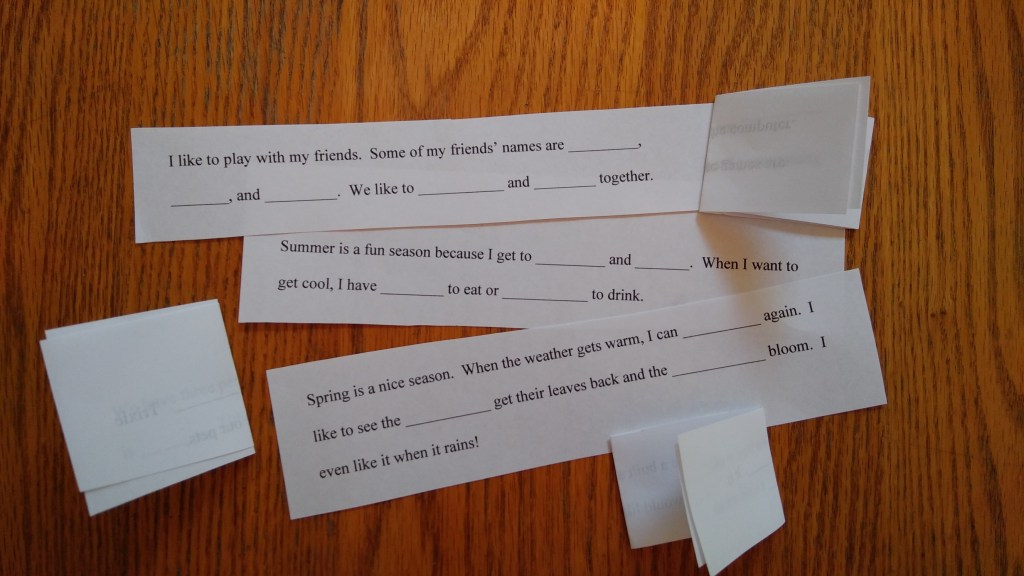
When my kids were young, we mostly followed the Charlotte Mason approach to education: literature-based schooling, short lessons, lots of nature study, and frequent copywork, among other things. For the most part, I kept this pattern for all four of my children, through their many differences in enthusiasm for school, attention spans, and abilities in each area of learning. I quickly discovered that I didn’t need a formal language arts program at all until mid-elementary years, thanks in part to the practice of Do-It-Yourself Copywork.

continue reading
Schooling

Race, Reliability, and Regret: A Teaching Story

In the mid-‘90s, I taught English in an upper-class suburban high school. In my first year of teaching, I was assigned one class of “English Basics,” a class for students who were far behind their peers in their ability to read and write. Basics was a small class, usually only around 10 students, and in the class of sophomores that I was given, the kids were reading on about a second grade level. I was never told the educational or personal background of any child, and I had no special training to help these students, but like all new English teachers, was expected to teach one class of Basics for a couple of years. The positive side, I was told, was that I would only have the class for first quarter and then again for third quarter. Another teacher would take the class second quarter and fourth quarter, so we would each have a “break.”

This staggered-teaching arrangement, especially for a class of kids who were far behind academically, seemed odd to me. I wondered if it had the inadvertent effect of instability and impermanence for the students. The teachers seemed to like it, though, and who was I to say anything—me, a brand-new teacher? Still, I had nagging doubts about this set-up and how beneficial it was for the kids.

continue reading