Looking for tips and suggestions on creating a homeschool Bible (or Bible-related) class for your high schooler or middle schooler? Read on to see many of my favorite suggestions for a wide range of students, including a great Bible you may never have heard of, other books at all reading and interest levels, and miscellaneous ideas to round out your Bible class.
continue readingCategory: Schooling
Schooling Uncertainty 2020: Homeschool Edition

Going into this year (so long ago now…), we all thought that Decision 2020 was going to be about casting our vote for President of the United States on November 3. Silly us. That decision pales in comparison to the difficulty of determining what school will look like for our kids this fall.
continue readingDIY Copywork for Early Elementary
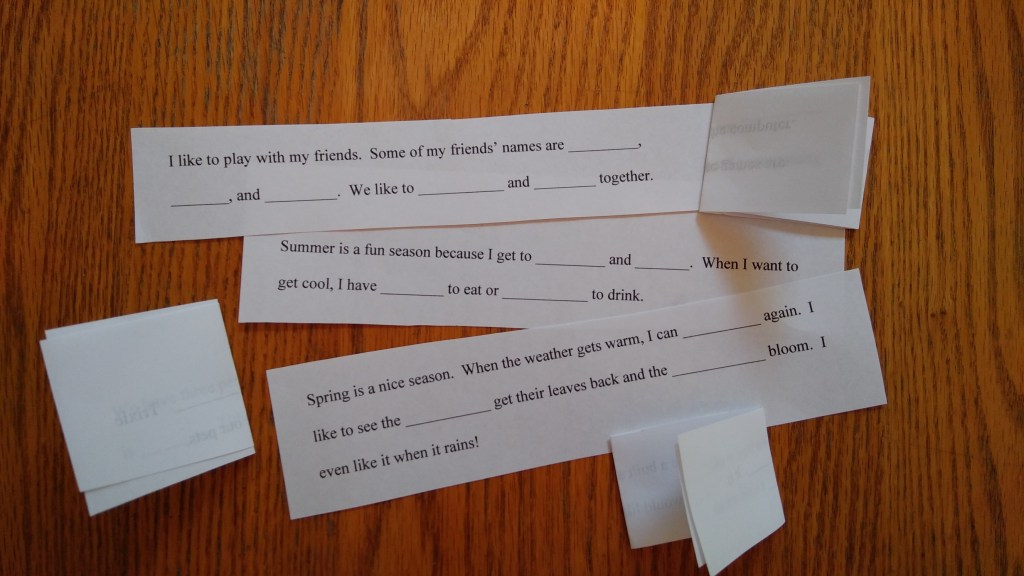
When my kids were young, we mostly followed the Charlotte Mason approach to education: literature-based schooling, short lessons, lots of nature study, and frequent copywork, among other things. For the most part, I kept this pattern for all four of my children, through their many differences in enthusiasm for school, attention spans, and abilities in each area of learning. I quickly discovered that I didn’t need a formal language arts program at all until mid-elementary years, thanks in part to the practice of Do-It-Yourself Copywork.
continue readingRace, Reliability, and Regret: A Teaching Story
In the mid-‘90s, I taught English in an upper-class suburban high school. In my first year of teaching, I was assigned one class of “English Basics,” a class for students who were far behind their peers in their ability to read and write. Basics was a small class, usually only around 10 students, and in the class of sophomores that I was given, the kids were reading on about a second grade level. I was never told the educational or personal background of any child, and I had no special training to help these students, but like all new English teachers, was expected to teach one class of Basics for a couple of years. The positive side, I was told, was that I would only have the class for first quarter and then again for third quarter. Another teacher would take the class second quarter and fourth quarter, so we would each have a “break.”
This staggered-teaching arrangement, especially for a class of kids who were far behind academically, seemed odd to me. I wondered if it had the inadvertent effect of instability and impermanence for the students. The teachers seemed to like it, though, and who was I to say anything—me, a brand-new teacher? Still, I had nagging doubts about this set-up and how beneficial it was for the kids.
continue readingThe “How to Raise a Reader” Myth

I’m an avid reader. I own a couple of thousand books, I read almost every day (for fun), and I’ve been like this my whole life. When I was a little girl, I spent breakfast time reading every box and bag in the kitchen, I read during recess at school, and I was often admonished to “take my nose out of a book” to look at the scenery on car trips.
I married a man who reads almost as much as I do and owns even more books. When we had children, they were all raised in a house full of books, used literature-based learning for school, saw their parents reading often, and were read aloud to until they were teens every single school day. We read really good books, too—fun and interesting books that everybody liked. So naturally, they all grew up to be readers, right?
Wrong.
continue reading Great and Noble Tasks