Reading

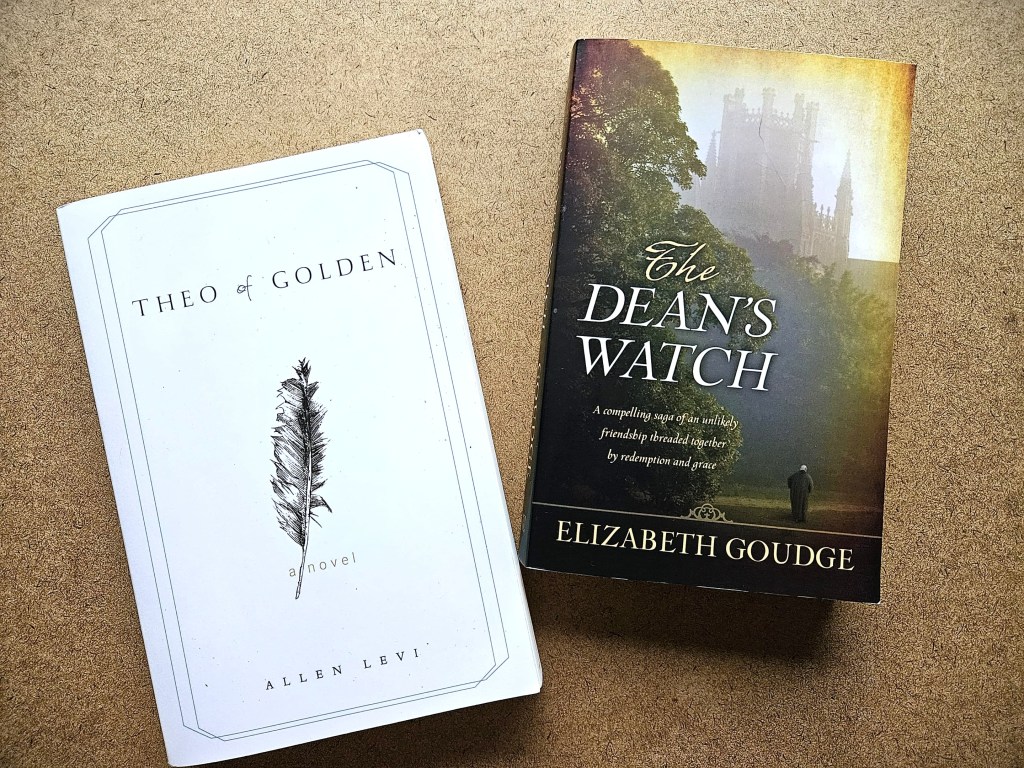
Two Elderly Gentlemen, Two Novels of Generosity and Grace

I’m a reader, a former bookseller, a former English teacher, and a writer—and I’m also a Christian. So when I come across an excellent novel that is clearly written by a Christian author, I rejoice. Sadly, this doesn’t happen nearly as often as I’d like.

Of course, Wendell Berry and Marilynne Robinson fall into that category. As does Kristin Lavransdatter, my favorite novel of all time (read why here). And I just finished two books back-to-back that have me thinking there must have been divine intervention in my selections. One of them is a national bestseller, a rags-to-riches publishing story that has taken readers—especially Christian readers—by storm. The other is an exquisite novel from a masterful author whom I just started reading within the past year.

continue reading
Faith · Reading

Favorite Books (and More!) for Advent

One of the most exciting and comforting aspects of the end of the calendar year is surely the celebration of Advent, when Christians remember the first coming of Christ and anticipate the second. This season awakens a childlike and reverent wonder that’s a welcome respite from the commercialization that surrounds us during November and December.

I’ve enjoyed Advent both with my family (husband and four children) and also in a more solitary way, with my own daily Advent devotions. I’ll share both kinds of books here. I also became a Christian at age 30, and had absolutely zero previous knowledge of what Advent was or why we ought to celebrate it—so I also want to provide a few details to help those who are fairly new to the concept of the Advent season.

continue reading
Reading

Five Favorite Epistolary Books

What is it about books written in epistolary format (a series of letters) that I love so much? Not all epistolary novels are good, of course, but when they are, they seem to find their place more quickly onto my list of favorite books.

Here’s what I love about them:

  • They give you all of the advantages of a first-person narrator (personal insights and viewpoints in usually a more conversational or revealing tone)—but they are once-removed and multi-faceted. The narrator isn’t talking to you, the reader, but to someone else. The letters are sometimes to or from more than one person, as well.
  • They require you to pay attention to details like dates, locations, means of correspondence, and who the letter is to/from in order to follow what’s going on, both in the plot of the book and sometimes from your knowledge of the real world at the time.
  • They assume you can fill in the blanks. Depending on the author’s skill (and all of these books below have very skillful authors), you, the reader, will need to make inferences based on what is said, or not said, in the letters in order to connect the dots.
continue reading
Reading

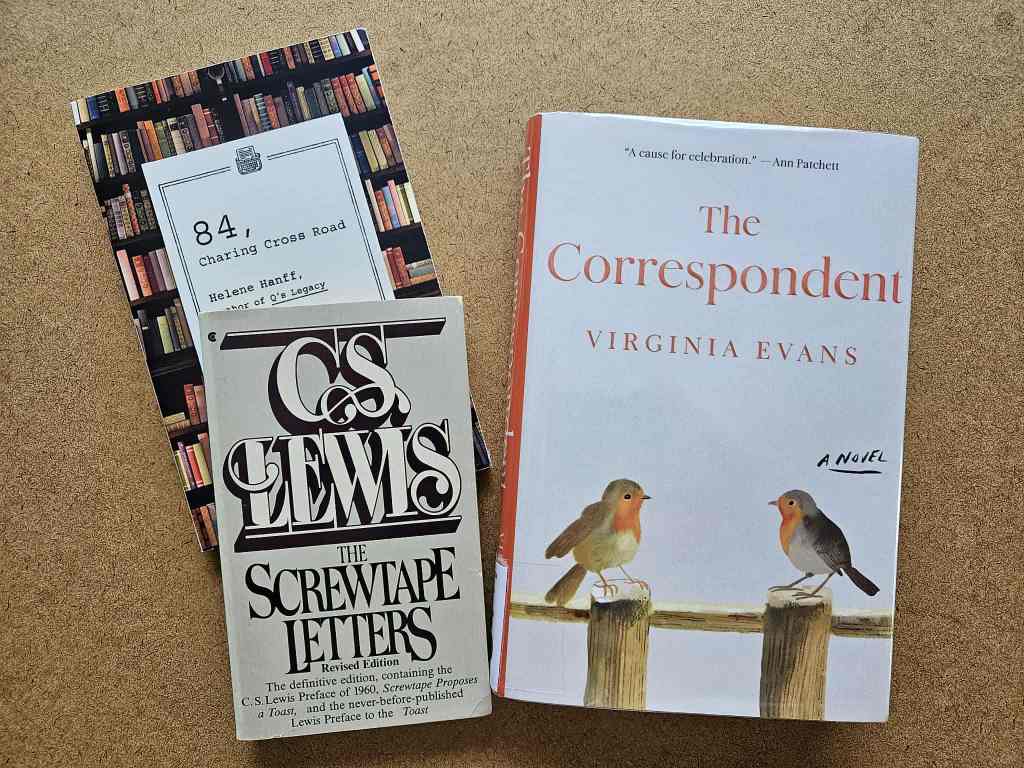
“Screwtape for Women” — Times Two

I suppose it was only a matter of time before someone got the idea that women ought to have their own version of The Screwtape Letters. It turns out that two people got this idea, seemingly at the same time.

Have you already read C. S. Lewis’s 1942 classic satire, The Screwtape Letters? If not, you should go do that. The letters are written from the point of view of a senior demon talking to a younger, inexperienced demon. The topic is a certain young man that they are trying to wrest away from “the Enemy” (God) and win to the side of “Our Father Below” (Satan). If this idea intrigues you, or if you loved this book as millions of Christians have, and especially if you are a woman, then read on.

continue reading
Reading

Two Elisabeth Elliot Bios: One Authorized, One Definitive

Soon after I became a Christian, almost 30 years ago, I found an author/speaker that I liked very much—a no-nonsense, straight-talking woman who would help shape many aspects of my early Christian walk. I owe a tremendous debt to Elisabeth Elliot, her books, and her radio program, Gateway to Joy, and I’m grateful to God for placing her in my life at just the right time. Her influence has made me a better person, and a better Christian.

So I was thrilled to see, a few years ago, that new biographies about her were in the works. First came Ellen Vaughn’s Becoming Elisabeth Elliot, part one of a two-volume set published in the fall of 2020 by B&H Books. Then came Lucy S. R. Austen’s Elisabeth Elliot: A Life, published in June 2023 by Crossway. This was followed very quickly by Vaughn’s highly anticipated second volume, Being Elisabeth Elliot, published in the fall of 2023. (I think these dates are important, as you’ll see.)

The two biographies (counting Vaughn’s two volumes as one bio) have similar titles, similar covers, and were published right around the same time. Vaughn’s is officially the authorized biography, but in my mind, Austen’s is the definitive one; of the two, it’s the most complete, must-read biography of Elliot’s entire life.

continue reading
Reading

At the Intersection of Art and Faith

A few years ago, I went to a museum exhibit and did something I’ve never done before or since in an art museum: I stood in front of a painting and cried.

The exhibit featured the paintings of 19th-century French artist Jean-François Millet, but it also included paintings by artists who were influenced by Millet—the most famous being Vincent van Gogh. I saw dozens of beautiful and amazing paintings that day, but the one that brought me to tears was this one:

continue reading
Reading

My Year-End Favorite Book List – 2024

I love all of the “favorite books” lists that abound at the end of each year. I’ll look at lists from just about anyone, no matter how much our reading tastes might (or might not) overlap, just because it’s interesting to me what people like to read.

I read a total of 25 fiction and 16 nonfiction books this year, with five abandoned (DNF) and a couple I merely skimmed. I hope you can find some new reading ideas among these favorite books I read in 2024. All books are listed simply in the order I read them during the year.

continue reading
Reading

Encouraging Stories and Reflections for Every Mom

Sometimes the title says it all, and sometimes it falls a little short. Here’s a book that’s much more than you might suspect from its title.

Devoted: Great Men and Their Godly Moms, by Tim Challies, is a mere 124 pages long but is packed with encouragement, wisdom, exhortation, and downright fascinating stories about eleven famous Christian men and their mothers. I’ve read books similar to this before (such as Lamplighter’s Mothers of Famous Men), and they’ve been about what I’ve expected: fairly interesting stories about strong and virtuous women who’ve raised children on to greatness, in a wise and godly manner. This one is so much more.

What makes Devoted different?

continue reading
Reading

Phone-Free and Play-Full

Phone-free and play-full. That’s what childhood used to be, and if you’re over a certain age (born before 1995, about), this probably describes your own childhood.

These two phrases—phone-free and play-full—are my big takeaways from Jonathan Haidt’s bestselling book The Anxious Generation: How the Great Rewiring of Childhood is Causing an Epidemic of Mental Illness. The copy I read is pictured above, with my many sticky notes still attached.

You might know Haidt as the co-author of the 2018 bestseller about college students, The Coddling of the American Mind: How Good Intentions and Bad Ideas Are Setting Up a Generation for Failure, among other books. He’s an NYU professor and social psychologist who says in The Anxious Generation what has been obvious to many people just from observation and personal experience, and he’s got the data to back it up.

continue reading