Reading

Favorite Books about Pioneer Women

“Hey, God, you should have made me born 100 years earlier!” —me, age 8

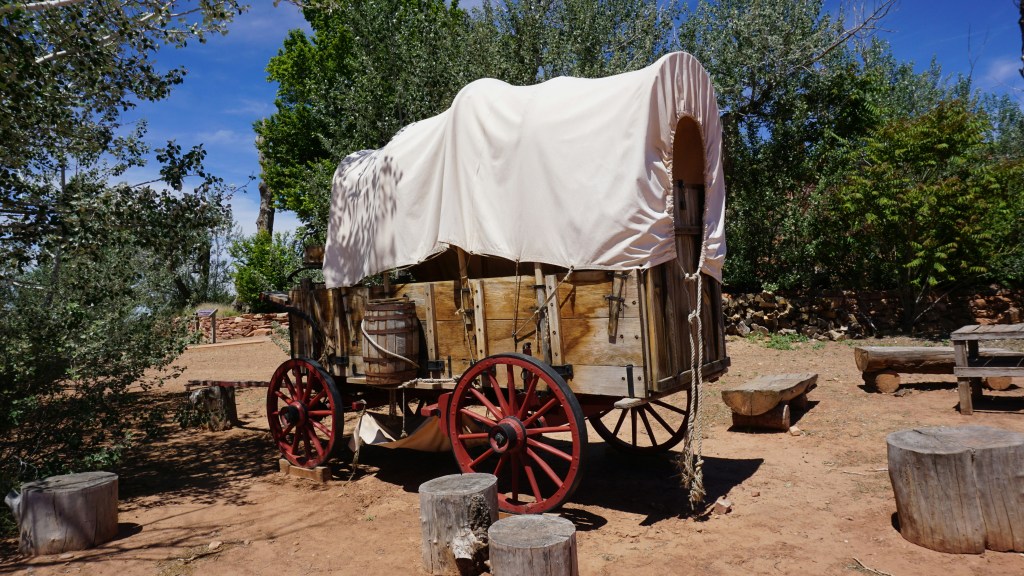
The first time I can ever remember telling God what he ought to have done in my life was while I was reading Laura Ingalls Wilder’s Little House books. I was given the complete boxed set for my birthday, and I devoured them one after the other, immersing myself in the world of late-19th century U.S. pioneer life. I felt deep in my heart that I ought to have been a child of the 1870s rather than the 1970s.

I trust God’s judgment and plan for my life more now than I did as a child, so I’m no longer upset about not being born into the 19th-century American west (which in the 1800s would have been anything west of the Appalachian mountains). But I still love reading about this time period, and more specifically, about women during this time period, especially pioneer women who traveled west and often stayed there to create a home.

So here’s a list of my personal favorite books in this area for those who, like me, are pioneers at heart—or who just like to read about them.

continue reading
Faith

Growing Older with Wisdom, Not Bitterness

I didn’t like turning fifty.

Turning thirty didn’t bother me at all. Turning forty I barely remember because I was so busy with young children, work, homeschooling, and church. But turning fifty was a little worrisome because it was the first decade that sounded even remotely “old” to me. It was hard to believe that I had been alive for half a century.

And now soon, very soon, I’ll be turning fifty-nine, which, if you’re counting, gives me just one more year before I turn sixty. When my husband turned sixty a few years ago, I remember saying breezily to him, “Aww, it’s fine! Sixty is the new forty!” But now the shoe is on the other foot and I’m finding myself clinging fondly to my fifties because they’re actually looking pretty good to me right now, and that decade sounds quite young, especially when it’s mostly in the rearview mirror.

Probably my sixties will eventually feel as comfortable as my fifties do now—and I’m sure a few encouraging minutes of conversation with a woman who is older than I am would confirm that fact—but right here, right now, knocking at the door of almost-sixty, it’s a little hard to swallow.

continue reading
Schooling

Big Moments from 23 Years of Homeschooling

I’m retiring this week from a job I’ve had for the past 23 years. It’s a job I chose willingly and have loved. I’ve been a homeschool mom.

Now, homeschooling isn’t for everyone, for lots of reasons. I believe strongly in good schooling options and parental choice, and I’ve written about that a few times already. But I was able to homeschool, I believe God called us to homeschool, and I very much wanted to homeschool, so I did.

I wonder how other moms celebrate or commemorate the end of homeschooling? Here’s my method: First, I had a good, long cry. Then I sent a family text with a picture of a completely clear dining room table (see above), telling everyone that my 23 years of homeschooling had come to an end and how much I loved them. My husband and I went for a walk and got ice cream. And then I sat down to write this highly personal (but maybe a little bit universal?) list of big moments, along with a few pictures from homeschooling in the Matt household:

continue reading
Parenting

Three Words for Christian Parents

My granddaughter and I had a conversation recently about family while cooking together in my kitchen—a narrow galley kitchen in a house of less than 1500 square feet:

Me: “Papa and I used to have lots of children living with us in this house. We had your daddy first, and then his sister, and then two more brothers! I wonder how many people that is all together who used to live here?”

My granddaughter, a spirited, math-loving three-year-old, is now intensely interested in how this conversation is going. Her attention is momentarily diverted from stirring the eggs. “How many?” she asks breathlessly, eyes wide. She holds up her fingers to count as I say the family names one by one.

“Six!” she shrieks in disbelief. “Six people in this house?” This cracks me up because that’s the exact response I got from certain people when we announced 18 years ago that we were having a fourth child, and that no, we were not planning to move.

“Yes, six!” I smile at her, and I’m overcome, as I so often am these days, at the memories in those two little words.

Because after 30 years of marriage, of raising four children who all started very small but quickly (so quickly) grew into full-sized humans who did indeed take up a lot of space in our small house … after all those years, this somewhat crowded nest is almost empty.

*                      *                      *

Here is God’s plan for us when we begin families of our own: that we would raise up children—human beings made in his image—all the way to adulthood, even though we ourselves are far from perfect and in need of forgiveness every day. That we would be in charge of small, vulnerable, impressionable people 24/7, despite our fairly serious character flaws. That we would provide for them in every way throughout every life stage, even when our own sinful natures are in frequent conflict with theirs. When you think of the enormity of this task that God has set before parents, imperfect and ill-equipped as we are, it’s hard not to wonder, what was he thinking?

continue reading
Faith

“Lord, Give Me a Sign”

When I set out on the six-minute drive to pick my son up from work, I had an urgent issue on my mind. I wanted to make the most of my limited time to talk out loud to God, and I do that sometimes when I’m alone in the car.

My prayer went something like this (also, there might have been a few tears involved, along with a fumbling grasp for glove compartment fast food napkins at the stoplight):

“Lord, this is a big decision. I don’t know what to do. It affects not just me, but other people, too, and I’m scared of all of this change. Dear God, please help me. Can you …” (hesitating now) “… and you know I hardly ever ask you for this, Lord … I’m actually not sure I ought to be asking it at all, and I’m sorry if this is wrong to ask … but can you possibly give me a sign so I know what to do?”

Even as I said the words, my mind flew to the book of Judges, when Gideon put God to the test with a sheep’s fleece, asking for a specific sign to confirm what God had clearly called him to do. This scene has never sat well with me, yet Gideon received an answer exactly when he asked for it, and without reproof from God. So (I told myself) maybe my asking God for a sign wasn’t so bad after all?

continue reading
Reading

Henry VIII, in His “Own” Words

What comes to mind when you hear the name Henry VIII?

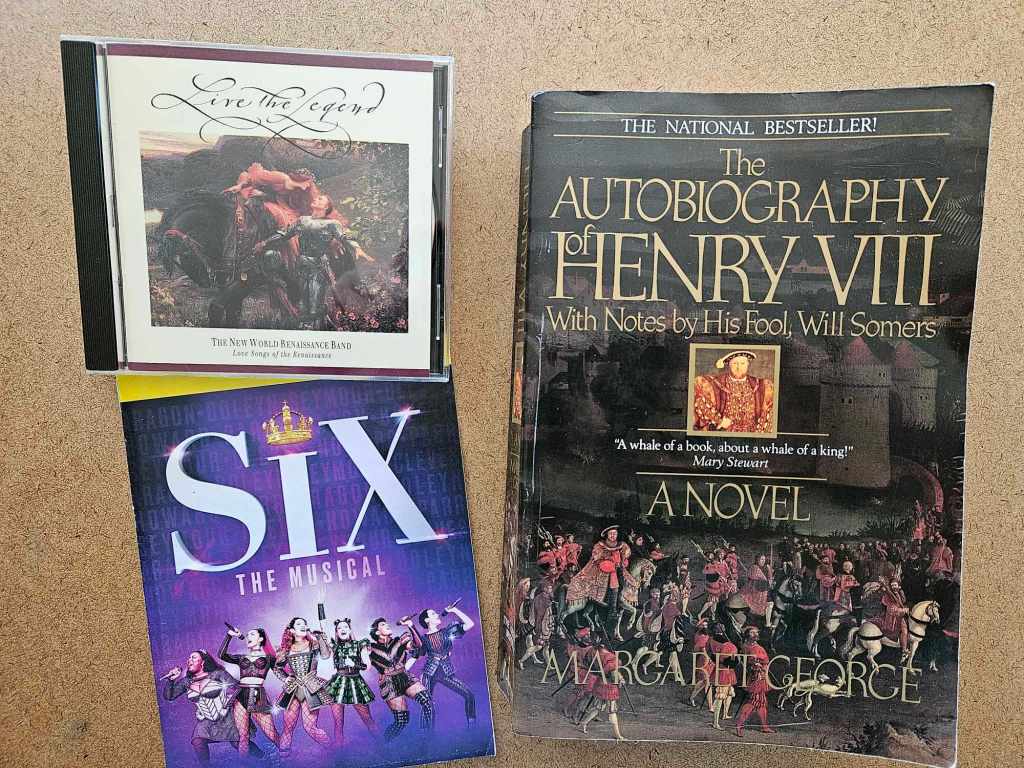
When author Margaret George asked people this question, here’s a summary of the answer she got: “Henry VIII was a huge, fat, oversexed man with gross table manners who had eight wives, killed them all, and then died of syphilis.” She found out during the course of extensive research that not one of these things about Henry was true, or at least, not entirely true.

So she wrote a 900-page novel about him, making the daring decision to tell his story in first person: The Autobiography of Henry VIII. It’s fiction, but it’s based on solid research, and it provides a fascinating look at the entire character of this complex and important historical figure.

continue reading
Faith

Reflecting Christ in the Crucible of Your Marriage

When my son was in the Marines, the culmination of his recruit training was a 54-hour ordeal called The Crucible. The Crucible is designed to challenge recruits both mentally and physically, consisting of food and sleep deprivation along with a combat assault course, a casualty evacuation, a night infiltration course, and much more. I prayed my 18-year-old son through it from 2,000 miles away, knowing that he must complete this challenge in order to attain his dream of becoming a Marine.

The word “crucible” comes from the Latin word crux, meaning “cross” or “trial,” and it’s often used to describe any very difficult test or trial. In a literal sense, a crucible is a container used for melting or testing metal or other substances at a very high temperature. A crucible must be made of the right material in order to maintain its structural properties without being damaged from the intense heat within. The contents inside are transformed, but the container itself remains undamaged.

And so it is with a Christian marriage of many years. After decades together, you and your spouse are transformed, but the container of your marriage, Lord willing, remains undamaged.

continue reading
Faith

On Whales, Menopause, and Thanks to God

Have you ever thought to yourself, “I wonder how many mammals go through menopause?” I certainly hadn’t—up until last week.

It turns out that only a handful of mammals are known to experience menopause: humans, chimpanzees, and five species of toothed whales (short-finned pilot whales, false killer whales, killer whales, narwhals, and beluga whales). All other mammals (5,000+ species in all) retain their ability to reproduce throughout their lifespan. And as difficult and unpredictable as human menopause can be, I imagine that the alternative of never-ending fertility is not something most women would be jumping at the chance to experience, either.

In God’s good design, we humans share this somewhat rare life stage with only six other species on earth. Humans, however, are the only creatures who are able to reflect upon the experience of menopause, and even (stay with me here) thank God for it.

continue reading
Reading

Books about Books

Fellow readers, why do we love so much to read books about books and reading? This category of books is so large that you could probably devote an entire year to it and never run out of reading material.

Just recently, I read three fairly short books back-to-back about books and reading—not intentionally, though. One was a book my son was reading for his high school English class (and I’m his teacher, so I read it, too). One was a mostly-forgotten classic that I was lucky to find even one copy of in my library’s catalog of nearly 5 million items. And one was an Amazon suggestion that I had first read 30 years ago.

Two are fiction; one is nonfiction. Two are delightful and charming (even laugh-out-loud funny); one is chillingly prescient. Their publication dates span fifty-three years, and reflect the tremendous changes of the early to mid-twentieth century. Here’s my take on each of these very different books, followed by a list of other books about books that I’ve loved … and a few that I haven’t.

continue reading
Faith

“Trust in the Lord” … But How?

Back when my husband and I first became Christians, one of the passages that we most loved in our brand-new Bibles was this one: “Trust in the Lord with all your heart, and do not lean on your own understanding. In all your ways acknowledge him, and he will make straight your paths” (Proverbs 3:5-6).

For two people who had been leaning very much on our own understanding, the idea of trusting in God was both a welcome challenge and a restful change. We spoke often of this new concept and we frequently reminded each other to trust God in difficult situations. Throughout our 30 years of marriage, I suppose I had always thought that we were fully on the same page when it came to trusting God … but a chance conversation recently made me realize that trusting God doesn’t always look the same for everyone.

continue reading