

When I became a Christian at age thirty, I knew I needed a lot of work, so I looked forward to the ways that I would surely be changed as a result of my new life in Christ. Some changes came easily—cleaning up my speech and stopping swearing, for example. But most of the other changes that happened to me (and there were many) took much more effort and much more time, such as finally being able to forgive family members for past hurts. As I grew in Christian maturity, I realized that all of these changes and challenges are a part of the lifelong sanctification process.
And of course, that sanctification process isn’t over yet. I still need a whole lot of refining, as we all do, in order to be holy, or set apart for God: “As obedient children, do not be conformed to the passions of your former ignorance, but as he who called you is holy, you also be holy in all your conduct, since it is written, ‘You shall be holy, for I am holy’” (1 Peter 1:14-16).
Recently I was reminded of three challenging, life-changing quotes that aren’t from the Bible, but are particularly convicting in terms of how Christians are set apart for God. They touch on areas of our lives that we don’t especially like to think about or talk about freely with others:
- Our lack of self-control with our words;
- Our envy of other Christians;
- And our fear of suffering.
I invite you to take a closer look at these quotes (along with a related Bible verse for each), because whether we like it or not, when you and I gave our lives to Christ, these challenges—and many more like them—are what we signed up for.
Christian, Control Your Tongue
Is Christ alive in you? How can you know? Jesus shares this way to know in Luke 6:43-45: “For no good tree bears bad fruit, nor again does a bad tree bear good fruit, for each tree is known by its own fruit. For figs are not gathered from thornbushes, nor are grapes picked from a bramble bush. The good person out of the good treasure of his heart produces good, and the evil person out of his evil treasure produces evil, for out of the abundance of the heart his mouth speaks.”

Amy Carmichael (1867-1951), longtime missionary to the poor and founder of an orphanage in Dohnavur, India, gives us this convicting quote, from If: What Do I Know of Calvary Love?:
“If a sudden jar can cause me to speak an impatient, unloving word, then I know nothing of Calvary love. For a cup brimful of sweet water cannot spill even one drop of bitter water, however suddenly jolted.”
I have to ask myself, when I am “suddenly jolted,” aggravated by something or someone, what comes from my mouth and from my heart? Harsh, angry words? Feelings of impatience and frustration? Sarcasm or snark? Bitter thoughts or comments under my breath?
Our words and our tone matter—both in person and online.
(One of my spiritual mentors, Elisabeth Elliot, wrote a biography of Amy Carmichael called A Chance to Die. Amy Carmichael herself has many books; I’ve enjoyed Whispers of His Power, a daily devotional taken from her writings.)
Christian, Let Go of Comparison and Envy
A major theme of C. S. Lewis’s The Horse and His Boy is found in Aslan’s gentle rebuke of a character who asks him questions about someone else’s life: “Child, I am telling you your own story, not hers. I tell no one any story but his own.”
In the Bible, John the Apostle relates a story in John 21:21-22 about Jesus telling Peter about the way Peter would die, when Peter sees John walking behind them. “When Peter saw [John], he said to Jesus, ‘Lord, what about this man?’ Jesus said to him, ‘If it is my will that he remain until I come, what is that to you? You follow me!’
What is that to you, about the lives of others? What business is it of yours or mine who has what, or what God chooses to do with their lives, or what blessings God does or does not give to someone? Your job and mine is simply to follow Christ. As for other Christians’ lives, “What is that to you?”
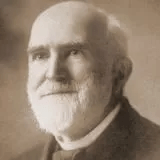
G. D. Watson (1845-1924) was an American preacher and writer whose evangelistic campaigns eventually took him all over the world. His piece below is called, “Others May, You Cannot,” and is one of the most honest and surprisingly comforting things I’ve ever read on the awkward topic of our comparison and envy toward other Christians. Originally published in pamphlet form, it’s long, but well worth reading:
If God has called you to be really like Jesus, He will draw you into a life of crucifixion and humility, and put upon you such demands of obedience, that you will not be able to follow other people, or measure yourself by other Christians, and in many ways He will seem to let other good people do things which He will not let you do.
Other Christians and ministers who seem very religious and useful, may push themselves, pull wires, and work schemes to carry out their plans, but you cannot do it; and if you attempt it, you will meet with such failure and rebuke from the Lord as to make you sorely penitent.
Others may boast of themselves, of their work, of their success, of their writings, but the Holy Spirit will not allow you to do any such thing, and if you begin it, He will lead you into some deep mortification that will make you despise yourself and all your good works.
Others may be allowed to succeed in making money, or may have a legacy left to them, but it is likely God will keep you poor, because He wants you to have something far better than gold, namely, a helpless dependence on Him, that He may have the privilege of supplying your needs day by day out of an unseen treasury.
The Lord may let others be honored and put forward, and keep you hidden in obscurity, because He wants you to produce some choice, fragrant fruit for His coming glory, which can only be produced in the shade. He may let others be great, but keep you small. He may let others do a work for Him and get the credit for it, but He will make you work and toil on without knowing how much you are doing; and then to make your work still more precious, He may let others get the credit for the work which you have done, and thus make your reward ten times greater when Jesus comes.
The Holy Spirit will put a strict watch over you, with a jealous love, and will rebuke you for little words and feelings, or for wasting your time, which other Christians never seem distressed over. So make up your mind that God is an infinite Sovereign, and has a right to do as He pleases with His own. He may not explain to you a thousand things which puzzle your reason in His dealings with you, but if you absolutely sell yourself to be His slave, He will wrap you up in a jealous love, and bestow upon you many blessings which come only to those who are in the inner circle.
Settle it forever, then, that you are to deal directly with the Holy Spirit, and that He is to have the privilege of tying your tongue, or chaining your hand, or closing your eyes, in ways that He does not seem to use with others. Now when you are so possessed with the loving God that you are, in your secret heart, pleased and delighted over this peculiar, personal, private, jealous guardianship and management of the Holy Spirit over your life, you will have found the vestibule of Heaven.
Sometimes God has us in a season of deepening our humility, and it’s possible that the “season” may turn out to be very long, perhaps lifelong. One of my favorite things about Watson’s piece above is that everything he mentions could apply whether it involves other people or not (dealing with a lack of wealth, disappointment with a life lived in obscurity, the inconvenience and difficulty of true obedience), but Watson goes one step further and connects them to our natural propensity to compare ourselves to others—and to other Christians, at that.
(You can find many of G. D. Watson’s books, with good descriptions of each, at the publisher’s website. If you’d like a free download of this Watson tract, scroll to the bottom of this post.)
Christian, Look at Suffering in a New Way
“When I am afraid, I put my trust in you. In God, whose word I praise—in God I trust and am not afraid. What can mere mortals do to me?” (Psalm 56:3-4)

Susannah Spurgeon (1832-1903) was the wife of the famous preacher, Charles Spurgeon. But she was an author in her own right, as well, one who struggled with serious health issues for most of her life. In this quote from A Basket of Summer Fruit, she addresses the fear of suffering, and gives us a new way to talk to ourselves about “the Lord’s one reason” for everything that we experience from him, no matter if it is tender or severe:
“Now, my soul, from this time forth, decide to answer all the whys and wherefores which perplex your life by the simple response, ‘Because the Lord loved me!’ This will ensure complete deliverance from your fears every time you do in faith use it, and your Lord and Master will be greatly honored by such a casting of yourself upon His word and promise. Can you imagine a condition more blissful than that of being so sheltered and surrounded by his love, that no doubt, no fear, no questioning of His tender purpose can possibly touch you to harm you?”
Just imagine … you trust God so much, knowing that you are in his merciful hand at every moment of the day, that no matter what happens to you, you can respond, “Why? Because the Lord loved me!” This is a level of acceptance and obedience that can often seem unthinkable today, and yet in past centuries, I’m convinced that this is exactly how many Christians understood and lived with the many sufferings of their daily lives. If this seems difficult to apply to a current painful issue in your life, try looking at this quote from a distance: how has this proved to be true in your past? How have you seen God’s love for you in times when you were suffering or in physical or emotional pain? Can you see how he was with you, how he worked things out for your good, and why things happened as they did? And even if not, will you trust him anyway?
(If you’d like to know more about Susannah Spurgeon, Susie: The Life and Legacy of Susannah Spurgeon, wife of Charles H. Spurgeon is a very good biography.)
The Bible never tells us that the Christian life is going to be easy; in fact, it points out quite often just how hard it’s going to be. Jesus said, “If anyone would come after me, let him deny himself and take up his cross and follow me” (Matthew 16:24). Later, James wrote, “Count it all joy, my brothers, when you meet trials of various kinds, for you know that the testing of your faith produces steadfastness.” And why does steadfastness matter? “That you may be perfect and complete, lacking in nothing” (James 1:2-4).
Very often the hardest, most troublesome challenges about the Christian life are the same things that bring us to the doorstep of holiness where we have complete trust in God. The quotes above are difficult, yet true. I’m thankful for those who have given us hard words of encouragement like these.
Image by Woliul Hasan on Unsplash
As an Amazon Associate I earn from qualifying purchases, which I use to offset the costs of running this site.

 Great and Noble Tasks