
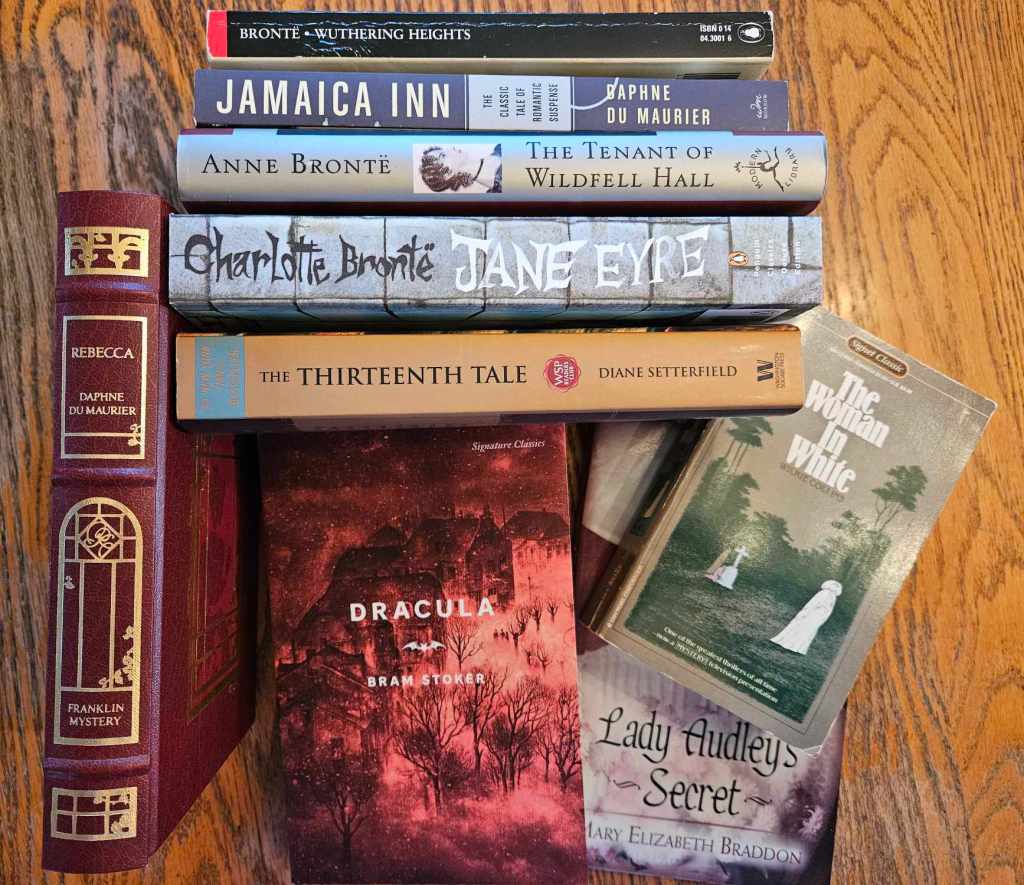
When I was nine, I wanted to be a mystery writer. I had read every Nancy Drew mystery and many Agatha Christies. I knew I loved to write, but despite giving it my best shot, I was never able to come up with a plausible plot—an essential element in mystery writing. So I never wrote mysteries. But for the past five decades, I’ve kept reading them.
In my early twenties, I discovered a related genre, somewhat like detective mysteries, but also not. These 18th through early 20th century books were full of psychological suspense and uncertainty, sometimes a vague or off-kilter romantic element, and often a dark and moody setting. They were not horror books, and they had no overly graphic content. But they were unsettling in a personal, domestic, off-balance kind of way. Characters were sometimes not who they seemed to be. Secrets abounded. The hero or heroine was on figuratively shaky ground, and you didn’t find out until almost the very end how—or if—the situation could possibly be resolved or redeemed.
Back in Victorian England, some of these books were called sensation novels; an earlier, related genre is gothic suspense. One of the reasons I love the older books is that I’m very unlikely to run into content that I don’t want to read: gore, excessive violence, or other gratuitous content. My favorites aren’t horror novels or primarily romance. (Although in my twenties, I used to like romance-leaning gothic novels like those written by Victoria Holt, Mary Stewart, and Phyllis A. Whitney.) The gothic fiction that I like most focuses on the suspense, the setting, the often-twisty plot, and the uncertainty or instability of the circumstances or characters.
The books below are classics for a reason: they’re the best of their kind. I don’t reread books very often, and I’ve read most of these more than once (Jane Eyre, four times and counting):
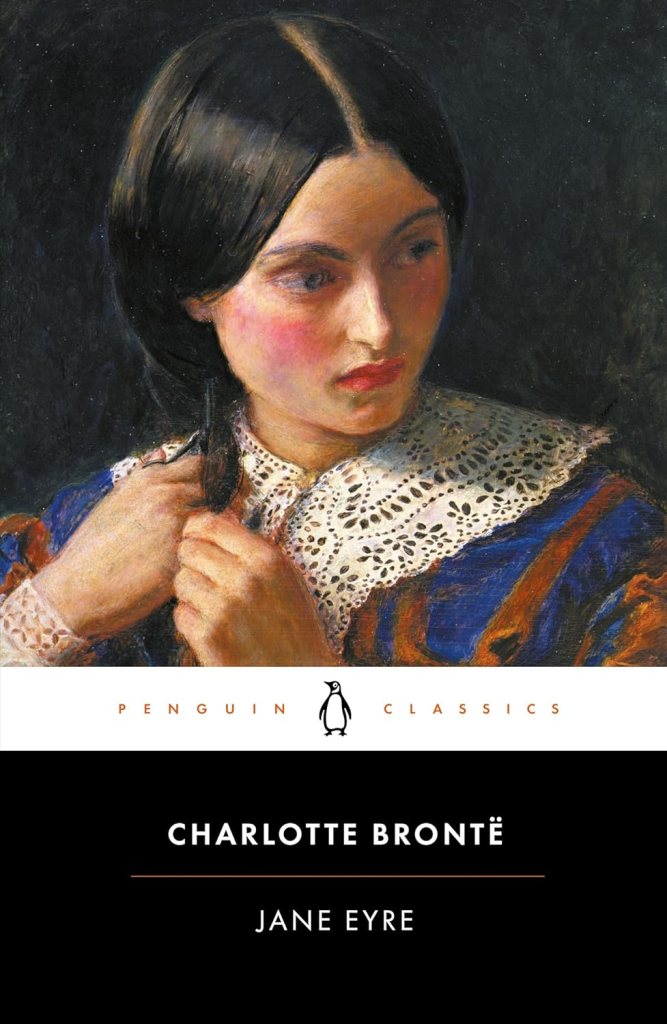
Jane Eyre, by Charlotte Brontë (1847). My favorite gothic suspense novel of all time. I love all of the Brontës, I love this book, and yes, I even love the character of Mr. Rochester (I was shocked to realize that not everyone does). So in addition to recommending Jane Eyre, I also recommend reading the parallel novel that imagines his own story, Mr. Rochester, by Sarah Shoemaker. I have a longer review of that book here.
.
.
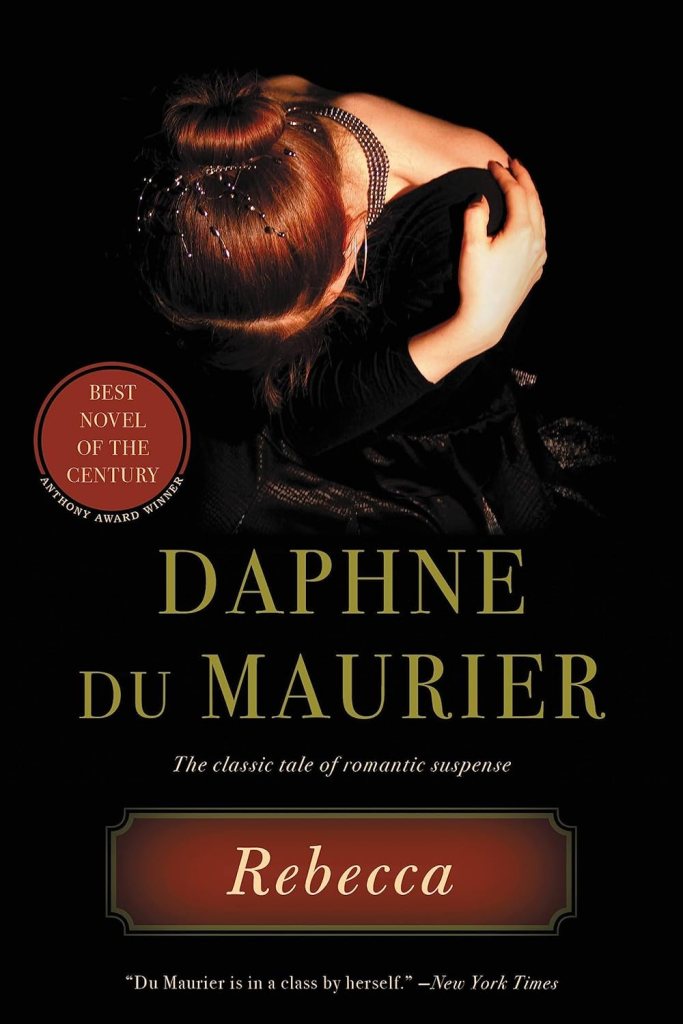
Rebecca, by Daphne du Maurier (1938). A must-read for anyone who likes this genre. If you haven’t picked it up yet, now is the time. Jamaica Inn and My Cousin Rachel are also good, but nothing can hold a candle to Rebecca. Also, that famous first line, “Last night I dreamt I went to Manderley again.”
.
.
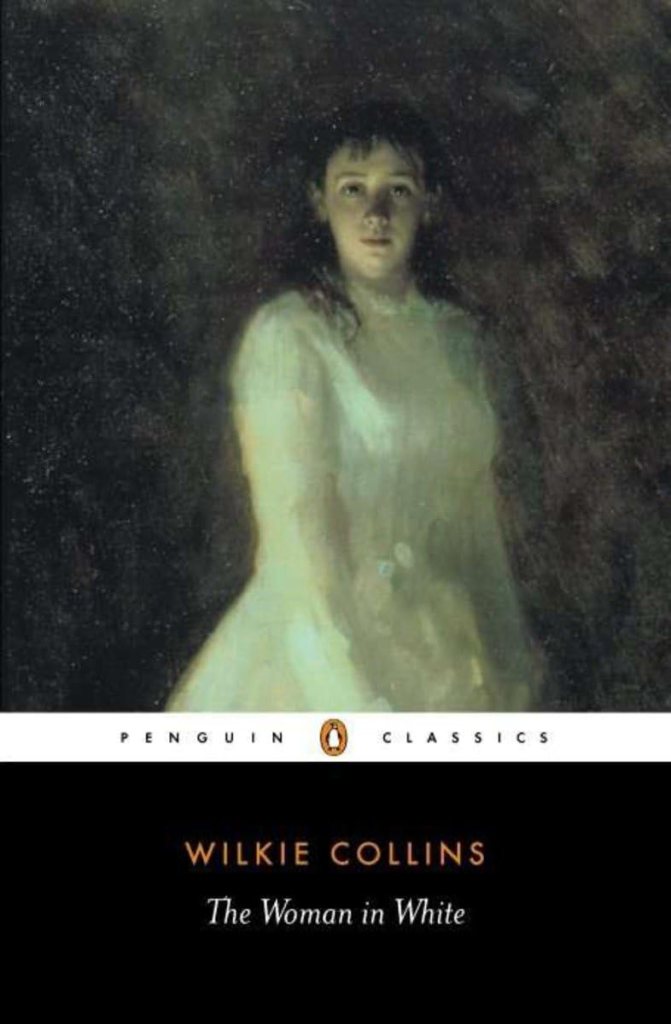
The Woman in White, by Wilkie Collins (1860). One of the great “sensation novelists” of his time. The Moonstone is considered by many to be the first-ever detective novel (and it’s a good one!), but The Woman in White is more along the lines of gothic suspense. This better-than-Dickens novel contains one of my favorite characters in all of fiction, Marian Halcombe.
.
.
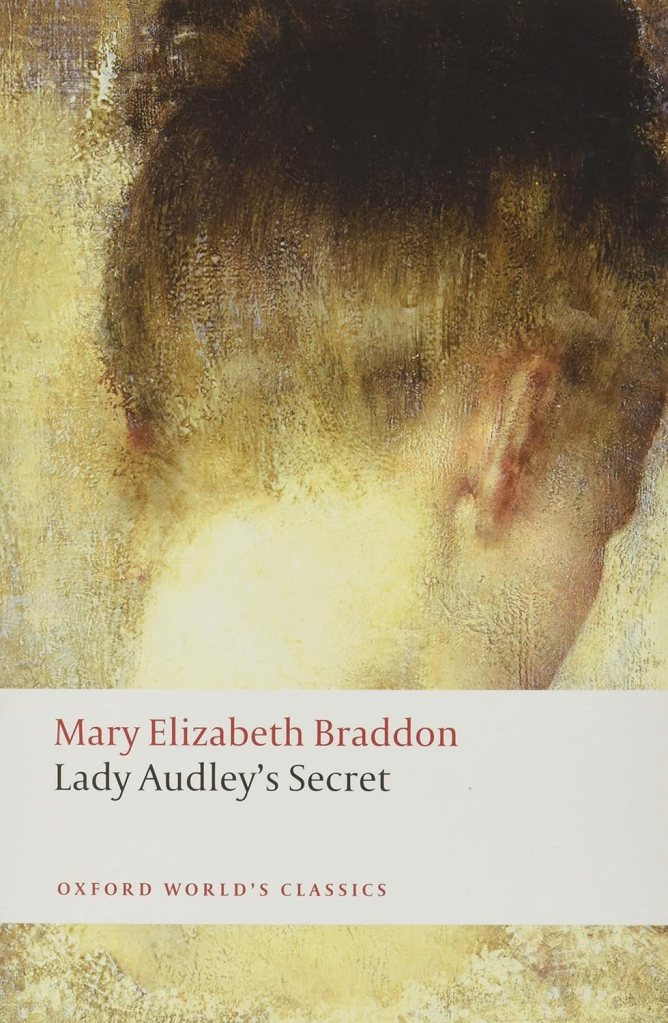
Lady Audley’s Secret, by Mary Elizabeth Braddon (1862). Braddon wrote dozens of books in her lifetime, but I had never heard of her until just this year. Inspired by a true case, Lady Audley’s Secret is her most famous “sensation novel” and is also a detective story. At one point the main character uncharacteristically feels that he’s being haunted by ghosts, so he abruptly shuts his door and locks it. His comment justifying this action made me laugh: “‘I haven’t read Alexander Dumas and Wilkie Collins for nothing,’ he muttered.”
.

Wuthering Heights, by Emily Brontë (1847). Very much a love-it-or-hate-it kind of book. I’ve taught it to high school seniors, so that helped me love it. There is redemption, but you have to read to the end to find it, and it’s not the main characters who are redeemed. Don’t miss the other excellent book by the third Brontë sister: The Tenant of Wildfell Hall, by Anne Brontë. There are many, many biographies of the Brontë family; the one I’ve read and liked was Rebecca Fraser’s The Brontës (1988). I also highly recommend the more recent movie, To Walk Invisible.
.

Dracula, by Bram Stoker (1897). I reread this recently and have even more appreciation for it now; my slightly longer review is here. Read it in October if you can. And because people sometimes think of them together, I’ll also recommend reading Frankenstein (Mary Shelley, 1818), which I like even better than Dracula.
.
.

The Castle of Otranto, by Horace Walpole (1764). This book is considered the first ever gothic novel, and I read it long ago for that reason alone. To be honest, I don’t remember much of it, so it’s due for a reread on my part. But I include it here because it was the first of its kind.
.
.
.

The Mysteries of Udolpho, by Ann Radcliffe (1794). If The Castle of Otranto is the granddaddy of gothic novels, The Mysteries of Udolpho is the mother of all romantic suspense. Now, I’m not a fan of Jane Austen (I know, I know—I’m just not), but it’s interesting to note that her Northanger Abbey is a parody of The Mysteries of Udolpho. Which makes me want to read this Radcliffe novel even more.
.
.
Finally, here are three gothic classics that I plan to read or reread soon:
The Turn of the Screw, by Henry James (1898)
The Picture of Dorian Gray, by Oscar Wilde (1890)
Dragonwyck, by Anya Seton (1944)
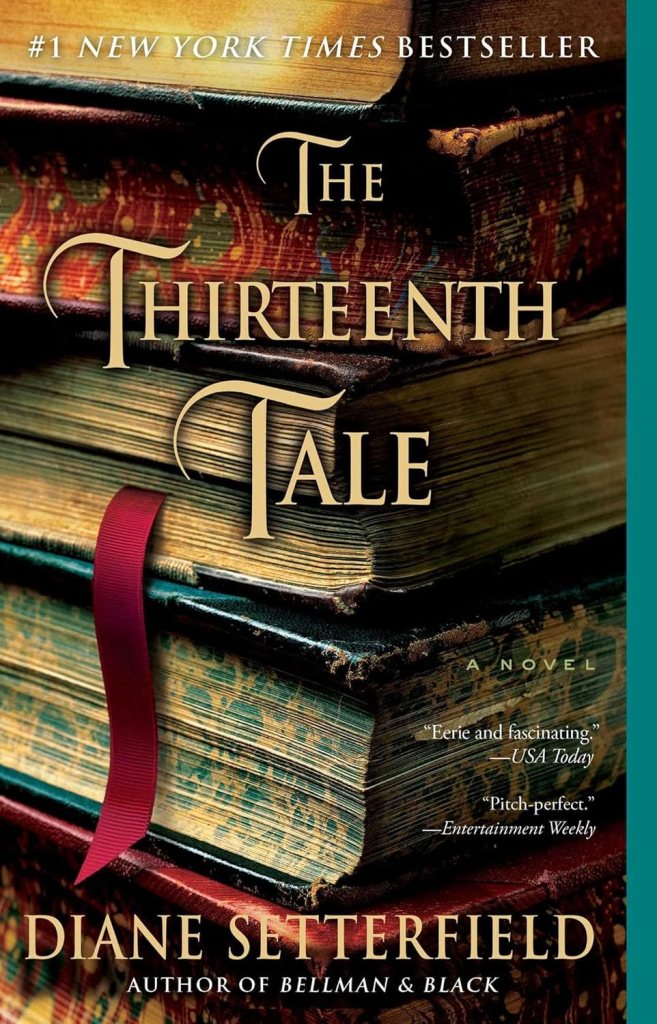
The most recent book on this list was written more than 80 years ago. Are people still writing good, non-lurid gothic suspense today? I’m sure someone is, but I admit I haven’t read much of it. Like all of modern entertainment and media, today’s books are more likely to have more of the kind of content I’m not interested in, and in gothic suspense, this can go downhill very quickly and in alarming ways (and I don’t consider myself an overly sensitive reader). One example of this is Mexican Gothic (2020), which starts out like a classic gothic novel and then goes off the rails and gets extremely bizarre about two-thirds of the way in. That one is definitely rated R. On the other hand, The Thirteenth Tale, by Diane Setterfield (2007) manages to be more in the vein of classic gothic suspense without as much graphic content. I can’t vouch for all of the details, but I read it when it first came out and loved it at the time. It’s a book-lover’s book and will keep you guessing until the end.
As I publish this, it’s March and we’re headed into springtime … perhaps I should have saved this post until October, but here you go. Every season is a good season for gothic suspense.
As an Amazon Associate I earn from qualifying purchases, which I use to offset the costs of running this site.

 Great and Noble Tasks