
Nikki Giovanni—famous poet and winner of dozens of awards—died last month at age 81. We never met in person, so she’ll never know that one particularly interesting thing she did while eating lunch at a Kentucky Fried Chicken more than 25 years ago greatly touched my life.
By the time she was in her late fifties and eating that lunch at KFC, Nikki Giovanni was hugely famous, as poets go. In addition to her numerous literary awards, she was also a longtime professor of English literature at Virginia Tech, and by the time she reached old age, she had received 31 honorary doctorates. Despite having grown up in poverty in the 1940s and ’50s, she had risen to a high station in life due to her own tenacity and literary talents.
I have it on good authority that she was also a really nice, down-to-earth person. When she came to our city in the late 1990s as part of the library’s literary speakers series, my husband, who worked in the library’s marketing department, had the privilege of accompanying her where she needed or wanted to go. And where she wanted to go, after she was done speaking and on her way back to the airport, was Kentucky Fried Chicken.
I loved her already for that—this famous woman who surely had enough money and clout to dine anywhere she chose. When she got to KFC, she ordered a three-piece chicken dinner at the counter and ate it at a table inside, along with my husband and a couple of other library people.
Which brings us to the one small act she performed there, the one that has greatly touched my life ever since. You might be thinking, oh, she must have performed some act of kindness, for a stranger or for my husband. Perhaps she did something for the workers at KFC that day, or for the people at the next table.
And all of those things would be good to do … but let me tell you what happened instead.
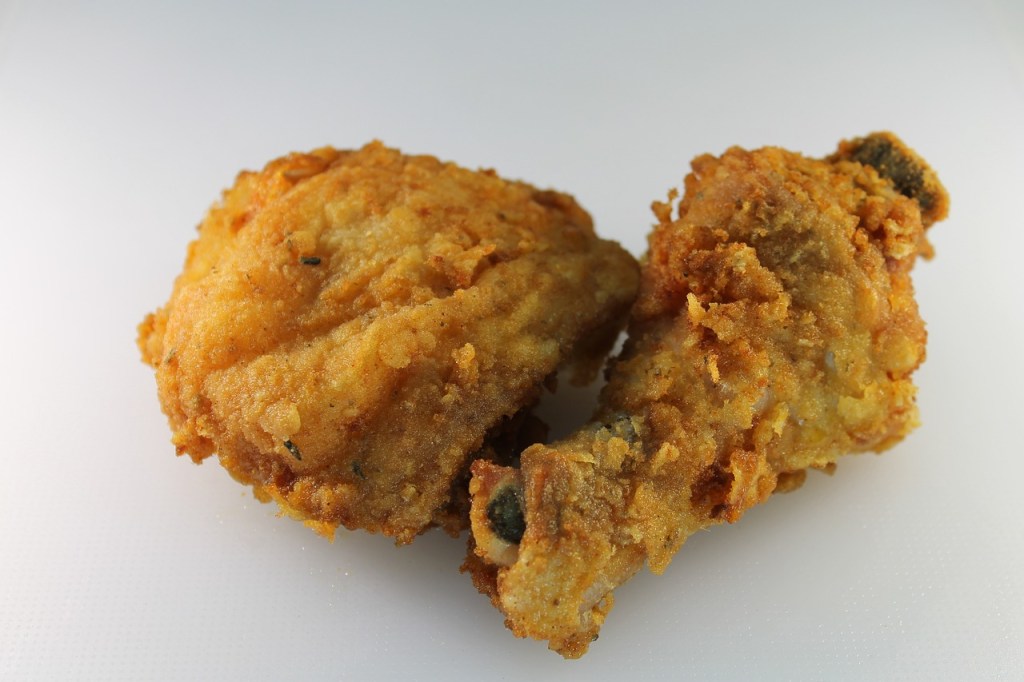
A KFC three-piece meal is a pretty good quantity of food, and Nikki Giovanni was unable or unwilling to eat all of it. As she was finishing up, she took several paper napkins from the table and proceeded to roll up two pieces of her uneaten fried chicken inside. She then placed this warm, aromatic, and bulky package into her purse, commenting with a laugh that the leftover chicken would be good to eat on the plane.
When my husband came home and told me this story, I’m sure he expected me to be a bit surprised, and probably to marvel at the eccentricities of people, even famous people, and how it was oddly charming that this renowned, brilliant, middle-aged woman would do such an unusual thing. And I probably did respond somewhat in that way. But deep inside I felt a kinship with Nikki Giovanni that I have with very few people: The bond of having escaped childhood poverty and of carrying that past with you just under the surface, through your entire life.
Immediately, I was transported back to age eleven or twelve, to the inexpensive, full-service smorgasbord about a mile from our trailer park, sitting at a table with my mom after making several trips to the buffet. Their outrageously large (maybe 5-inch diameter?) buttery rolls were the best we’d ever had, and the one still sitting on my plate was untouched. Into the napkin and into my mom’s purse it went (along with her own) to save for later. We weren’t actually stealing; we had paid for our meals. But we knew that an all-you-can-eat smorgasbord didn’t allow takeout containers, and we weren’t about to let those rolls go into the restaurant trash.
* * *
I’m around the age now that Nikki Giovanni was when she ate at KFC with my husband. Besides our love of words, she and I probably didn’t have much in common at this stage in our lives. And yet her act of packing that fried chicken into her purse bonded us together. At least, it did in my mind.
Now, it’s possible that for all these years, I’ve misinterpreted her actions that day. Maybe wrapping up fried chicken in a paper fast-food napkin and putting it in your purse has nothing to do with growing up poor. But whether it does or not, I’m determined to learn something from that act she performed, so matter-of-factly and without shame. Because at that moment, she seemed to be miles ahead of me in life in terms of accepting and being at peace with her past.
For me, the experience of growing up poor has stayed with me my entire life. There are lots of leftover emotions, needs, and eccentricities I carry from having to cope with dysfunction and instability from a very young age. Hiding just under the surface of my average, middle-class life, my past haunts me in ways that pop up without warning. I’ve often felt as if I was unintentionally and unwillingly living a double life, appearing to be something that I was not—where people assumed that I knew things I have never known, that I experienced things I have never experienced, and that I could identify with things I could never identify with.
That’s why my husband’s odd little KFC story resonated so greatly all those years ago, and came flooding back to me when I heard of Nikki Giovanni’s death. For all these years, I’ve admired this woman who seemed to not be ashamed of where she came from or of how she carried the vestiges of her past with her even in her vastly transformed adulthood. If she could do this, could I do it, too?
Could you?
Sometimes we carry shame or embarrassment from life situations that were or are mostly out of our control. Often that shame weighs on us every day, known only to us, and it affects nearly every aspect of our lives—our relationships with other people, our relationship with God, our perception of our circumstances, and our view of ourselves. Is it possible, instead of sweeping that shame under the rug, to bring it to the surface of your life, embrace it as a God-given part of who you are, learn acceptance of it, and come to peace with it? Strangely enough, that’s what the KFC story did for me. It took decades, and it may not even be an accurate interpretation of Nikki Giovanni’s actions, but it helped nonetheless.
Once when I wrote about growing up poor and the effect it still has on me, my sweet Christian sister-in-law said to me, “It may be where you came from, but it’s not who you are!” I understood her intent (that God defines who I am), but truly, my past is indeed a part of who I am and always will be. It’s been a part of God’s plan for me, and for that reason, I wouldn’t change it even if I could. It took me a long time to learn this and trust that he knows what he’s doing, and that I don’t need to be ashamed of the past that he gave to me. I can hold my past close—my younger self close—without embarrassment.
Even when I feel a strong urge to wrap up the fried chicken and put it in my purse for later.
.

I also spoke with Kurt and Kate of Moody Radio Florida about this post – you can listen to the 18-minute podcast here.
.
Related posts, of special interest to anyone who has overcome poverty or family dysfunction in childhood:
Growing Up Poor and Bernie’s Mittens (also linked above)
When Resilience and Grit Aren’t Enough
Photo by Kyriaki Digital on Pixabay

 Great and Noble Tasks
Thank you. As someone who also grew up poor and still struggles with the shame of a haunting past, this spoke to my heart.
By God’s grace, I’ve been spiritually and materially blessed beyond anything I could hope or imagine. But the poor little boy is never far from the surface. And that is exactly the way the Lord planned it.
Blessings!
LikeLike
Thanks for this comment and for sharing. I fully understand “blessed beyond anything I could hope or imagine.”
LikeLike