
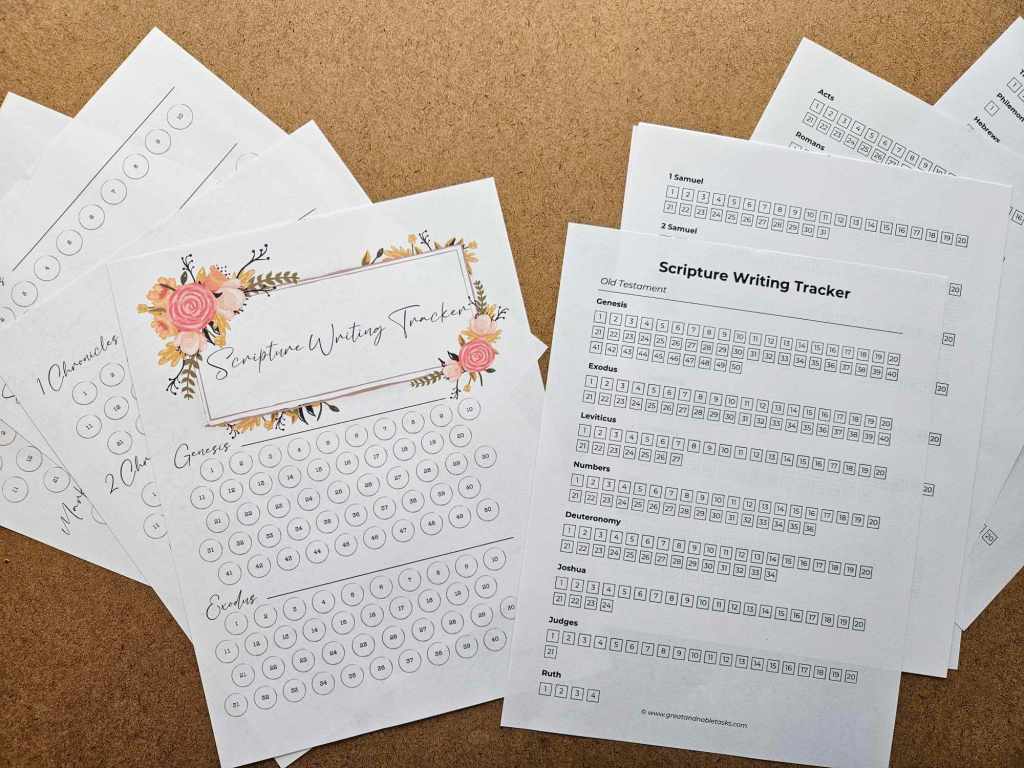
Here’s everything I use for Scripture writing, all in one place—plus a new Scripture Writing Tracker you can download for free.
It gives me great joy that so many people have tried Scripture writing as a result of reading about it here on my blog. Whether they’ve chosen the three-year, topical approach (monthly themes and very short passages) or whether they’ve gone directly to writing out entire books of the Bible, many readers are doing this for the first time, and it’s made a difference in the quality of their time with the Word.
I know that beginning anything new can seem overwhelming, even if it’s actually very simple. I had many questions when I began this journey more than six years ago. Just because it all seems second nature to me now, it wasn’t always that way. So I wanted to put it all in one place—all of my Scripture writing tips and resources here on Great and Noble Tasks, and all of the tools I use—both for those who are just starting this spiritual discipline and for those who’ve been at it for a while. I love all of these items and I use them daily. But as you read through the list, please remember this:
You don’t need anything for Scripture writing except three things: a Bible (whatever Bible you like), something to write with (whatever pen you choose), and something to write on (paper, a notebook, the back of an envelope, it’s your call).
Everything else is just icing on the cake. If you love office supplies (swoon), then get the pens that speak to you, or the journals or notebooks that you love. If you’re organized and love to see visual progress (that’s me, too), then print a Scripture Writing Tracker and Books of the Bible sheet so you can see exactly how far you’ve come and where you’re going. If you’re a memorizer, then write out from memory the passages or books that you’ve been working on. If you lead or attend Bible study, then write out the books you’re studying. And if you want to see what I do each morning, and the tools I use and why, keep reading. But never forget that the essentials—all that is necessary, the good portion (Luke 10:38-42)—is your Bible, a pen, and some paper.
That said, here are the tools and resources I use with this Spiritual discipline that I love:
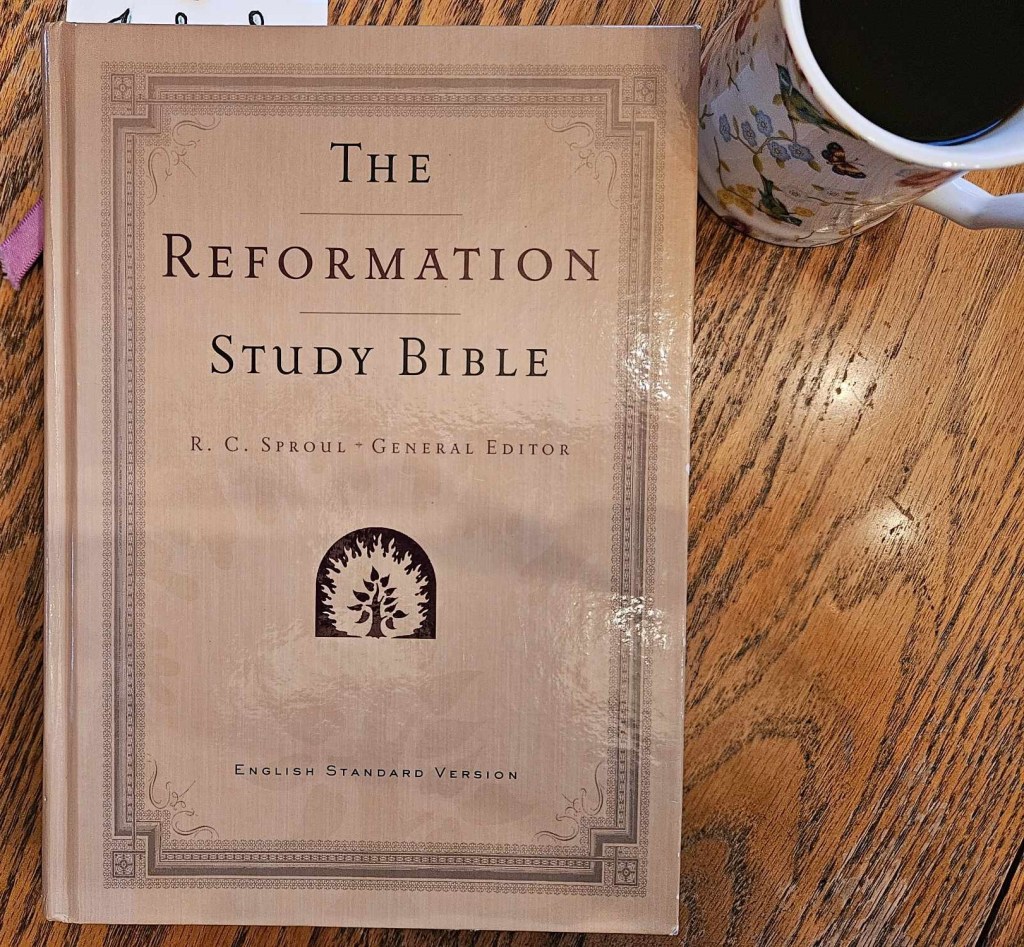
Bible—I use the Reformation Study Bible, but the ESV Study Bible would be a close second. I like using a study Bible for Scripture writing because I can write and read the notes at my own pace. That’s not always the case when I’m just reading the Bible (especially with a prescribed reading plan), so I take advantage of the chance I have to slow it down. While I love these particular study Bibles, it’s important to simply use the Bible that engages you and keeps you writing.
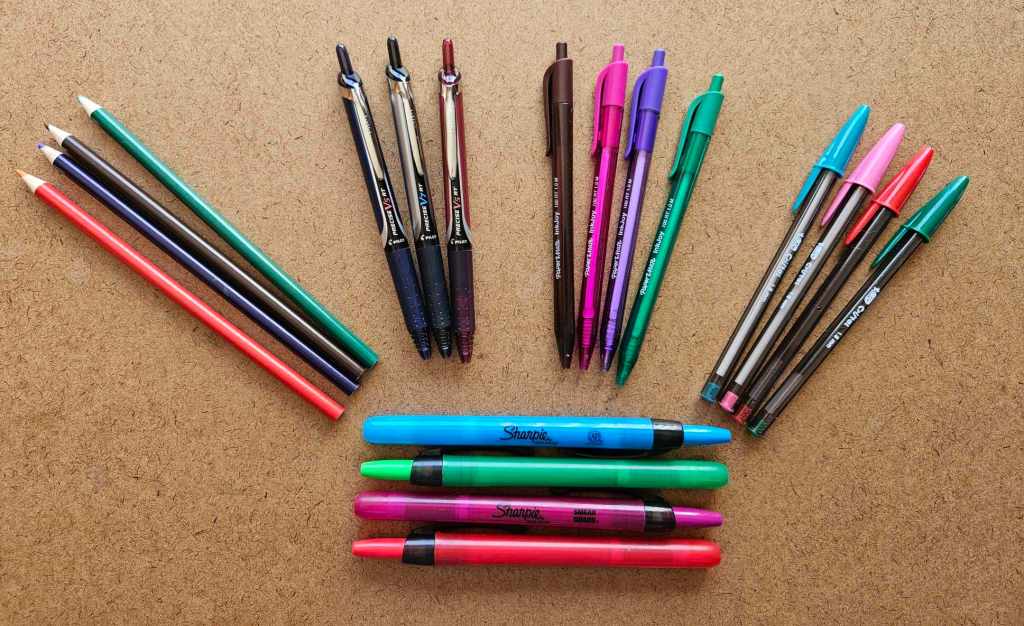
Pens, etc.—I like to change up my pens and use a different color for each new chapter I copy. My favorite fine point pens are Pilot Precise rollerball pens (assorted colors in either 0.7mm or 0.5mm—I like the extra fine 0.5mm thickness best); my favorite medium point pens are Paper Mate InkJoy (I use the 1.0 ballpoint, and I especially love the hard-to-find mocha one); and my favorite “thick” point pens are Bic Xtra Bold, 1.6 mm ballpoint.
I use colored pencils to shade in chapter numbers on my Scripture Writing Tracker; Prang is a good quality, inexpensive brand. For my Books of the Bible bookshelf (pictured below), I use Sharpie retractable highlighters, bought years ago back in my homeschooling days, and they’ve never dried out.
Notebooks—here’s where I may disappoint you if you are a lover of beautiful journals or notebooks. I use the most basic, cheap spiral notebooks I can find. Honestly, beautiful blank journals tend to intimidate me into not using them, and I greatly prefer the lie-flat feature of a simple spiral binding. (If you like fancier but still one that lies flat, here’s a good option). I don’t even care if the lines are wide rule or college/narrow rule—I’ve used both. Pro tip: Stay under 120 sheets, because all that ink will warp the pages and that’s no fun to write on. And if you want something to help you find your place quickly (besides a loose bookmark), these Post-It Flags do the trick; this package of 100 will last you a very long time and you might find other uses for them, too.
Scripture Writing Tracker—I now have two different formats to choose from! The original flowered tracker was created and given to me by Katie, who shared her story in my first Scripture writing post (linked below). The new tracker I created has a simple, clean design that is designed for either coloring in or checking off the boxes. (Note that both of these trackers are meant for those who are writing out whole chapters or books at once; they won’t work for topical Scripture writing like the three-year plan linked at the top of this post.)
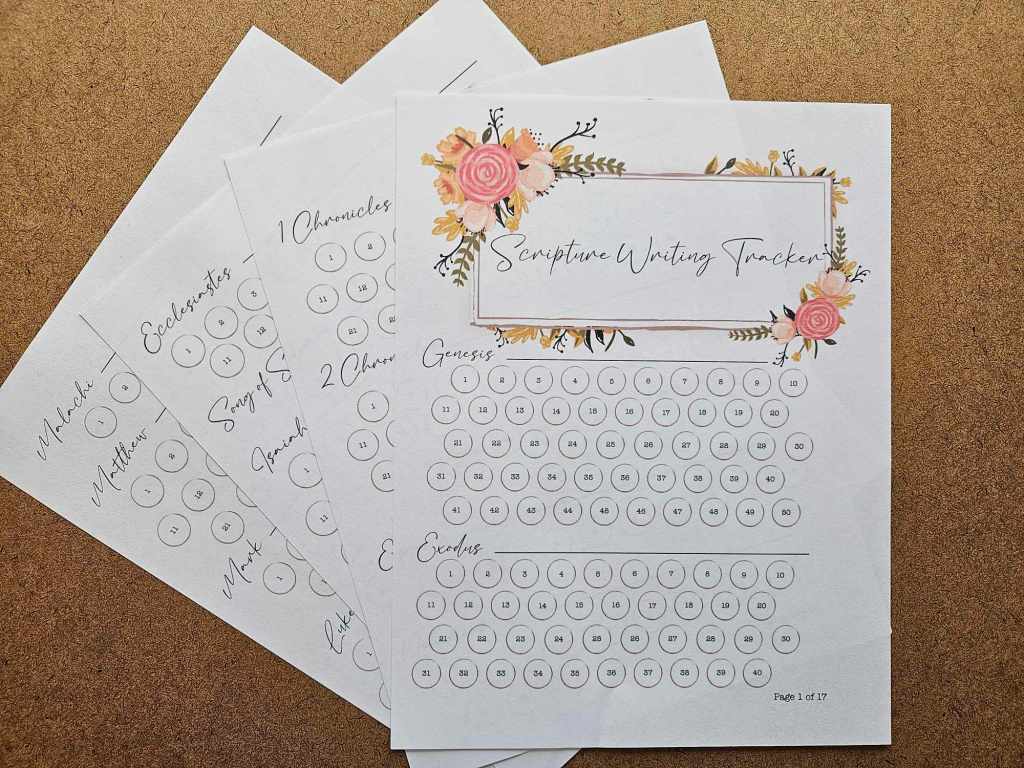
Download the flowered Scripture writing tracker (larger, fill-in circles) here:
.
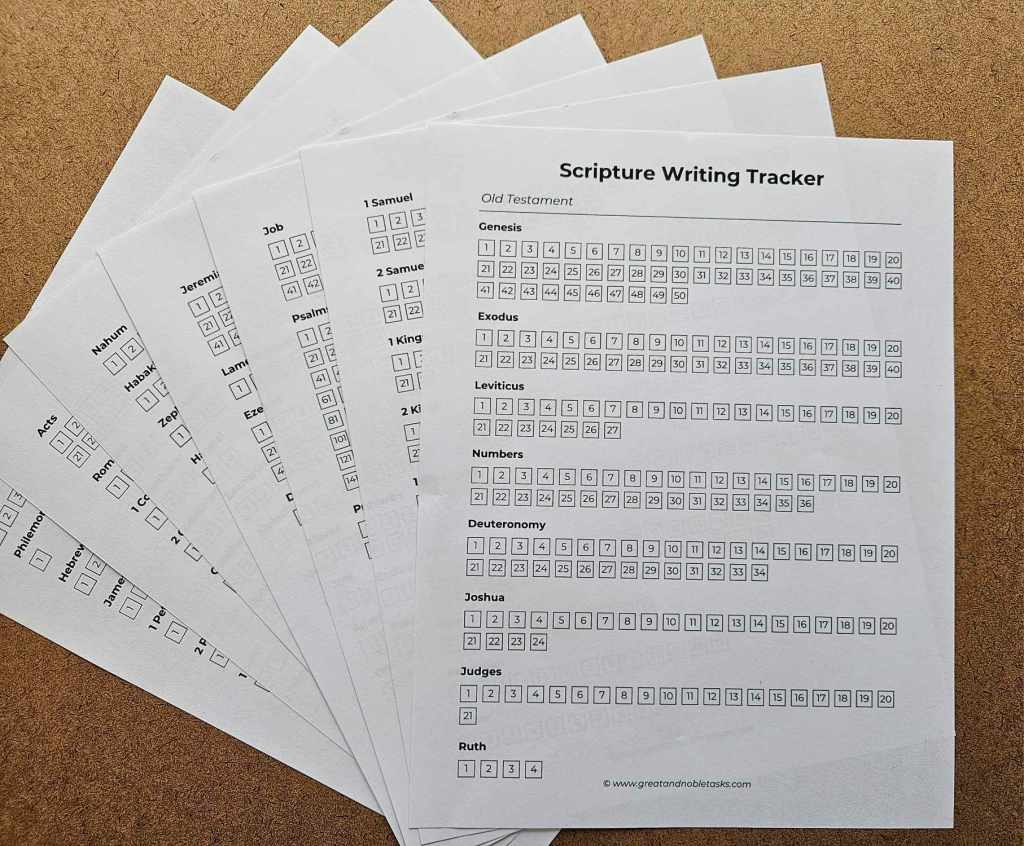
Download the plain Scripture writing tracker (smaller boxes) here:
.
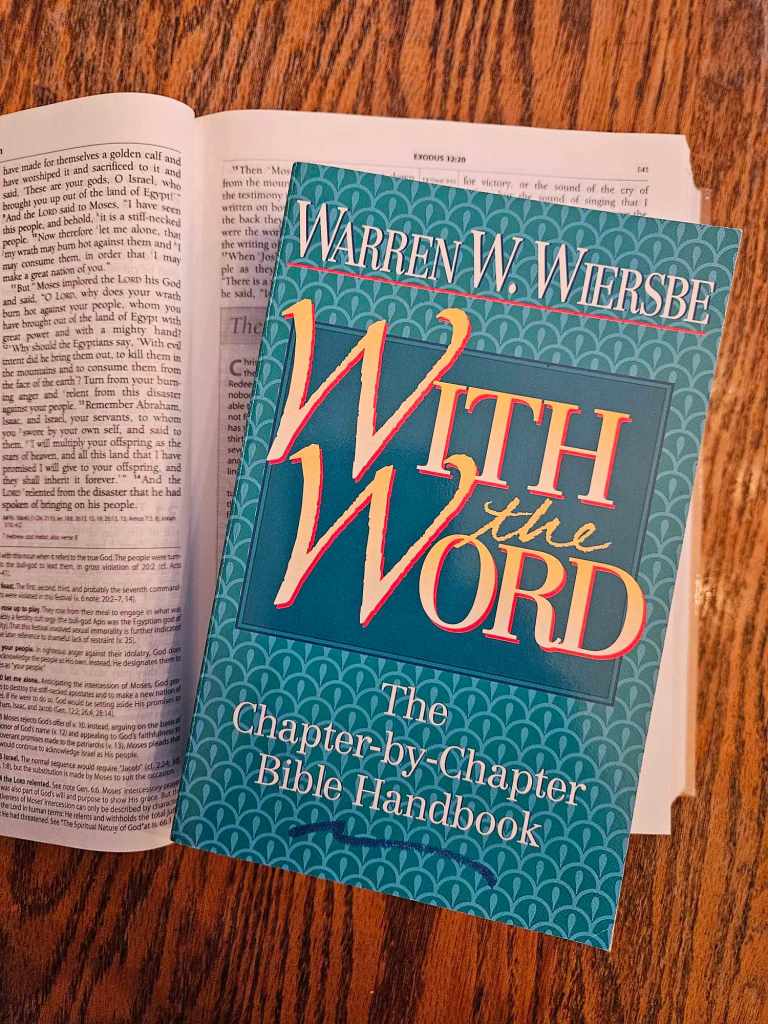
Supplemental reference—With the Word by Warren Wiersbe. I use this excellent chapter-by-chapter handbook to help me focus before beginning each new chapter I’m copying. It’s especially helpful in long or repetitive books (such as Isaiah, which is why I first bought it) or books with tedious lists or information, such as instructions for building the tabernacle or the precise design of the priests’ garments in Exodus. These very short, helpful devotional summaries are well worth the time to read them when I begin writing a new chapter.

Books of the Bible bookshelf—this visual organizer is handy to record/highlight books that you’ve finished copying. You could create your own, or you can easily do an internet search for “books of the Bible bookshelf free printable.” There are many options out there to choose from.
Finally, the two previous posts on this site about Scripture writing are where you’ll find all the nitty-gritty information on how and why to begin, how to decide what to copy, why handwriting is beneficial, and personal glimpses into the stories of other friends who have practiced Scripture writing. So if this post is your introduction to Scripture writing on Great and Noble Tasks, be sure to check out these previous articles that will give you a more complete view of this practice:
Ready to Try Scripture Writing?
Getting the Most Out of Scripture Writing
I’m not one to over complicate things—I know from experience that keeping it simple is often the key to establishing or continuing any new habit or discipline. Everything I use or have added to my Scripture writing is there for a reason. All of it helps me stay focused, brings me joy as I write, keeps me engaged and on track, and/or helps me better understand the Word of God. So … start out with a Bible, a pen, and some paper. If Scripture writing is something you want to continue, you’ll soon learn what you like to use, what you want to add, and what helps you maintain the joy of writing out the Bible, one word at a time.
.
Read more: I talked with my friend Andy at Bible Copy Club a while back about Scripture writing, and he wrote about our conversation in this post. Bible Copy Club delivers short passages to copy and accompanying meditations to your email, putting each passage into context.
.
Podcasts:
I also had a great talk with Kate of Kurt and Kate Mornings (Moody Radio Florida) about one of my other posts on Scripture writing. Take a listen here! (16 min.)
And… John at WORD FM Pittsburgh had questions for me and I enjoyed giving many practical answers and a few insights into what I love about Scripture writing. Listen here, starting at 24:10. (15 min.)
The links for qualifying purchases in this post earn me a small commission from Amazon, which I use to offset the costs of running this site.

 Great and Noble Tasks
2 thoughts on “My Scripture Writing Tools”